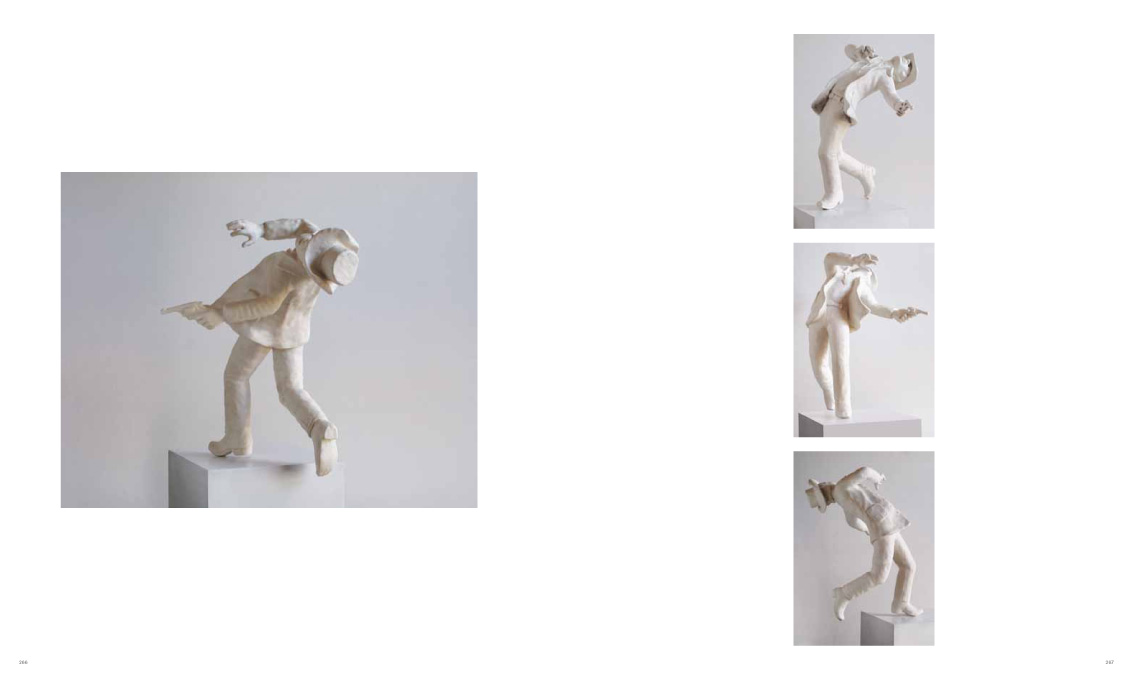
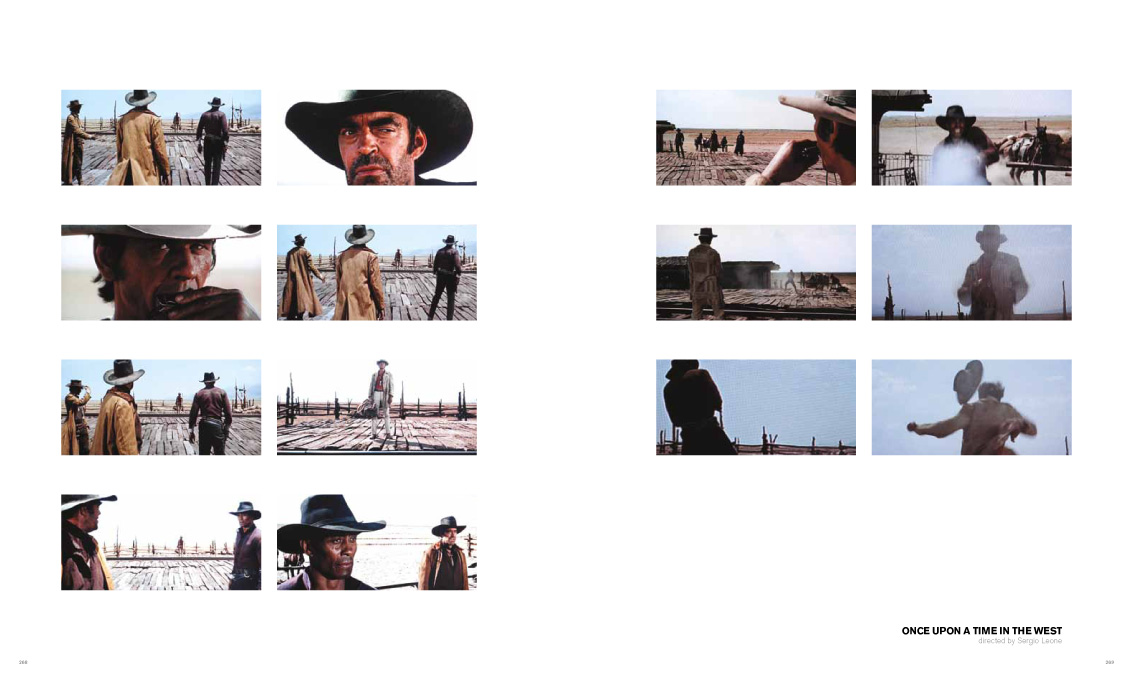
IKO IKO at Printed Matter’s Los Angeles Art Book Fair
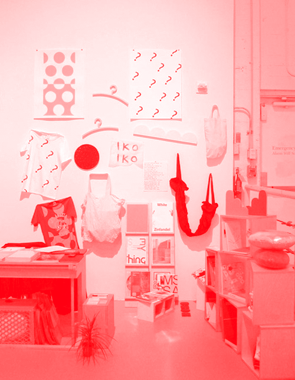
Printed Matter’s Los Angeles Art Book Fair
February 1-3, 2013
Opening: Thursday, January 31, 2013, 6–9pm
New York Times Tmagazine.
Hrag Vartanian/Hyperallergic.
Free and open to the public, the Los Angeles Art Book Fair is a unique international event for artists’ books, art catalogs, monographs, periodicals and zines presented by more than 220 international presses, booksellers, antiquarians, artists, and independent publishers from twenty countries.
Featured projects include an Homage to Mike Kelley presented by Gagosian, a Larry Clark Pop-Up Shop by BOO-HOORAY, and a stunning new installation by John Armleder with Three Star Books. Fulton Ryder will present publications by John Dogg and Howard Johnson; unique books and Untitled Originals by Richard Prince, and naughty pulp paperbacks.
Zine World is a super-sized subsection of the Los Angeles Art Book Fair, featuring zinesters from home and abroad, together with three zine exhibitions. GSD: Skate Fate till Today begins from Gary Scott Davis’ early, ground-breaking zine publishing of the 80s. Zine Masters of the Universe features zines by Mark Gonzales, Ari Marcopoulos, Ray Pettibon, and Dash Snow. Bedwetter and Beyond is a survey of the artist books and zines of Los Angeles-based artist Christopher Russell.
The Los Angeles Art Book Fair is the companion fair to the New York Art Book Fair, held every fall in New York. Over 20,000 artists, book buyers, collectors, dealers, curators, independent publishers, and other enthusiasts attended the New York Art Book Fair in 2012.
HOURS and LOCATION
Opening: Thursday, January 31, 6–9pm
Friday, February 1, 11-5pm
Saturday, February 2, 11-6pm
Sunday, February 3, 12-6pm
The Geffen Contemporary at MOCA
152 North Central Ave
Los Angeles CA 90012
(213) 626-6222
Capricious 13
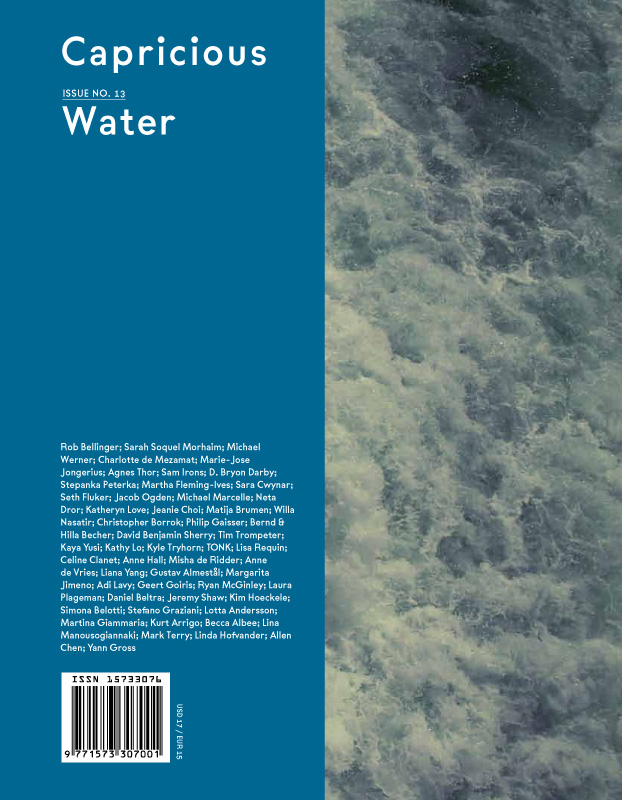
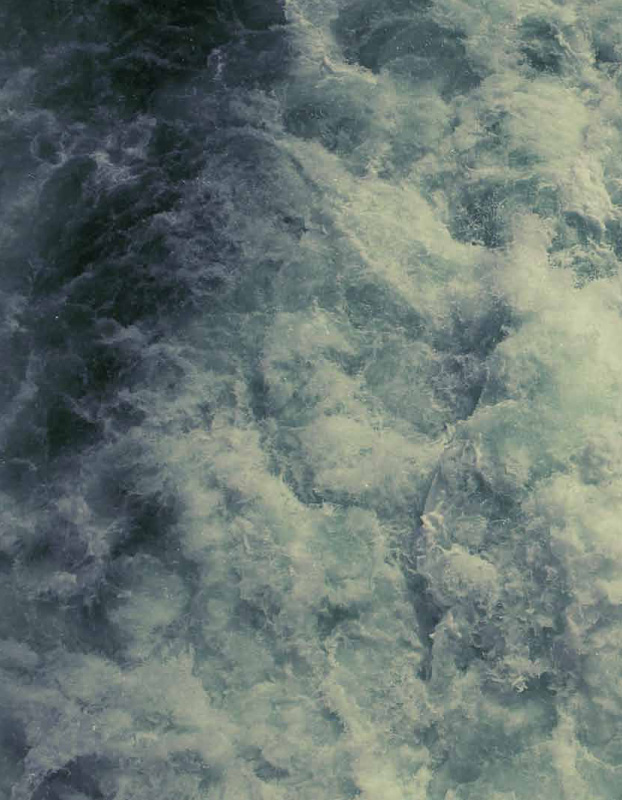
Capricious 13, Water
Softcover, 158 pp., offset 4/4, 210 x 270 mm
Edition of 2000
ISSN 1573-3076
Published by Capricious
$17.00 ·
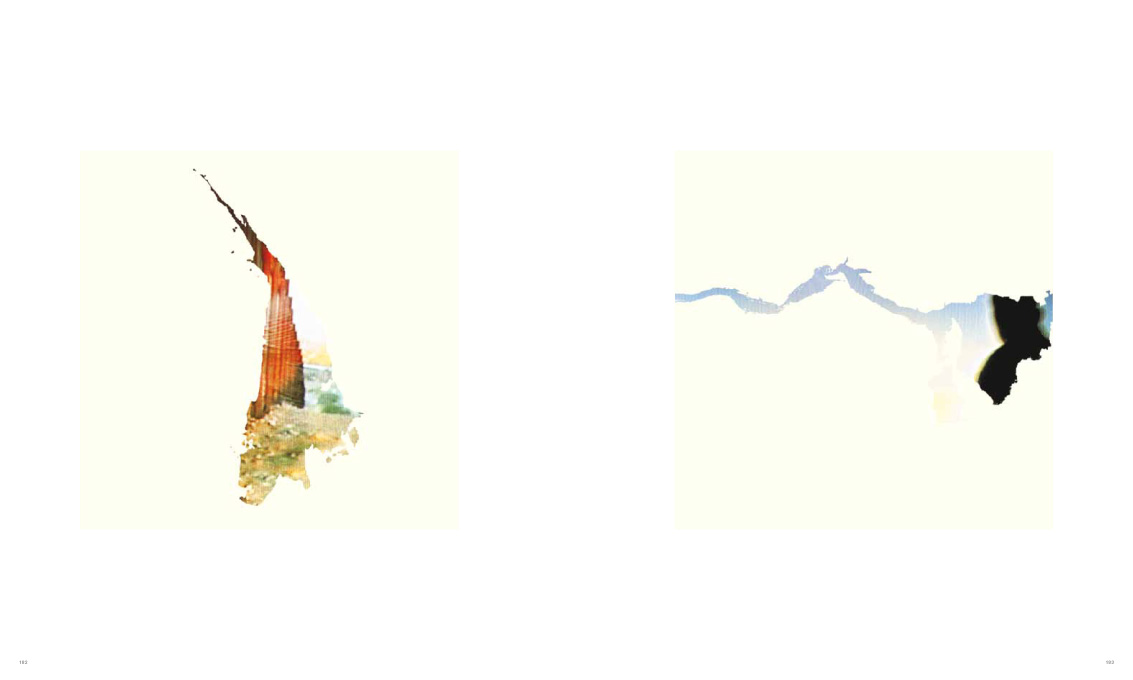
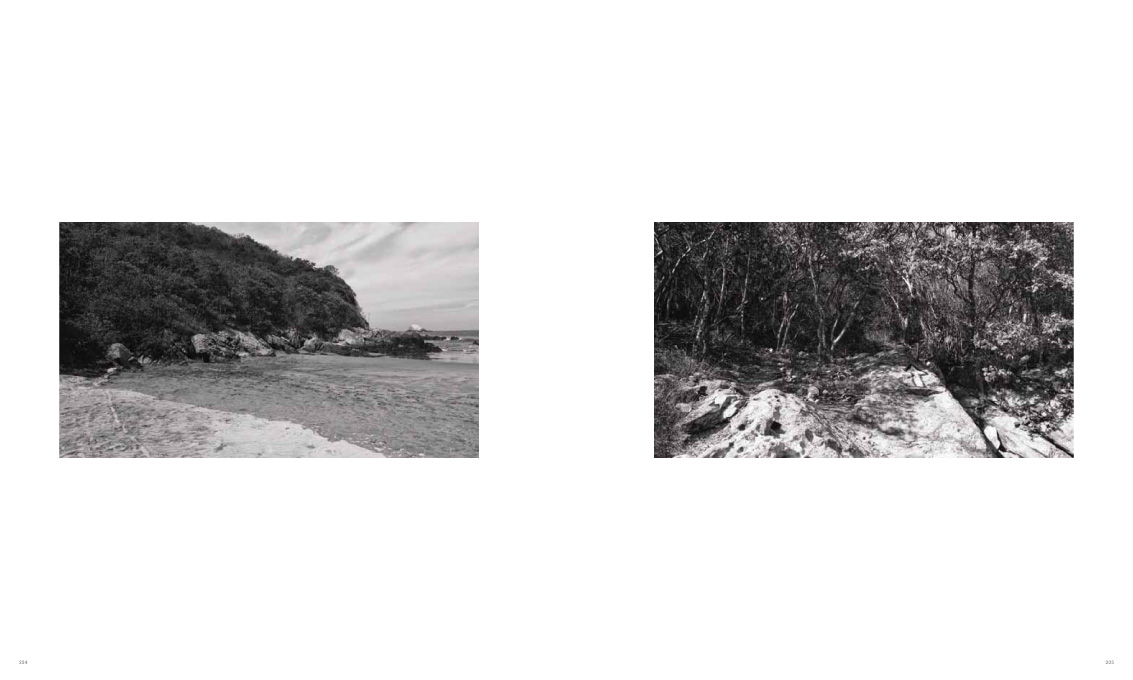
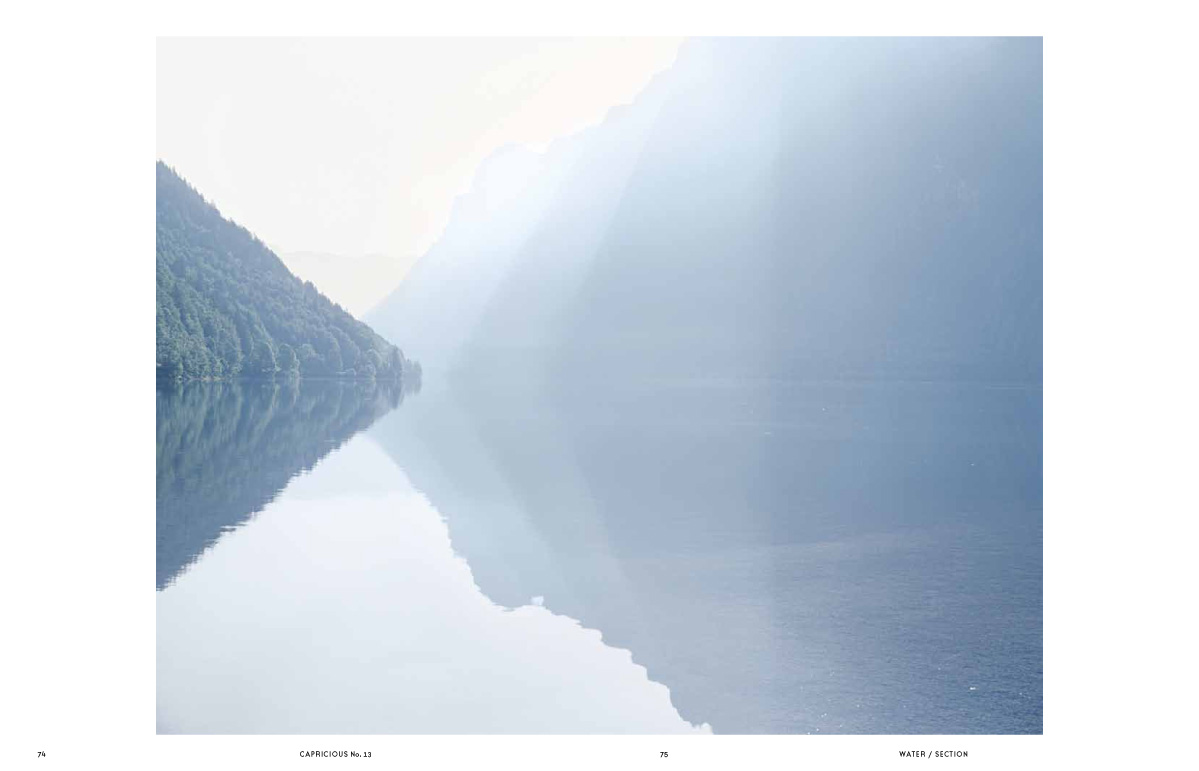
Capricious 13 moves through sections like Arid, Drift, and Quiet, a fluid visual narrative honoring water. And speaks to our palimpsest-like landscape, where the rise and fall of water lines are marked, and the history of water remains tangible. The work selected explores a myriad of watery dimensions, from the intimate, as water spills into our personal histories, quietly shaping our daily rituals; to global, as water is tamed, an ancient presence spun through industrialization. What ultimately comes to surface is, to what degree water has, in turn, overwhelmed and overcome us.
Also included, is a special chapter of curated texts by Hanna Wilde, including diverse variations on the theme, from poetry to political essay, to stage performance and film excerpt.



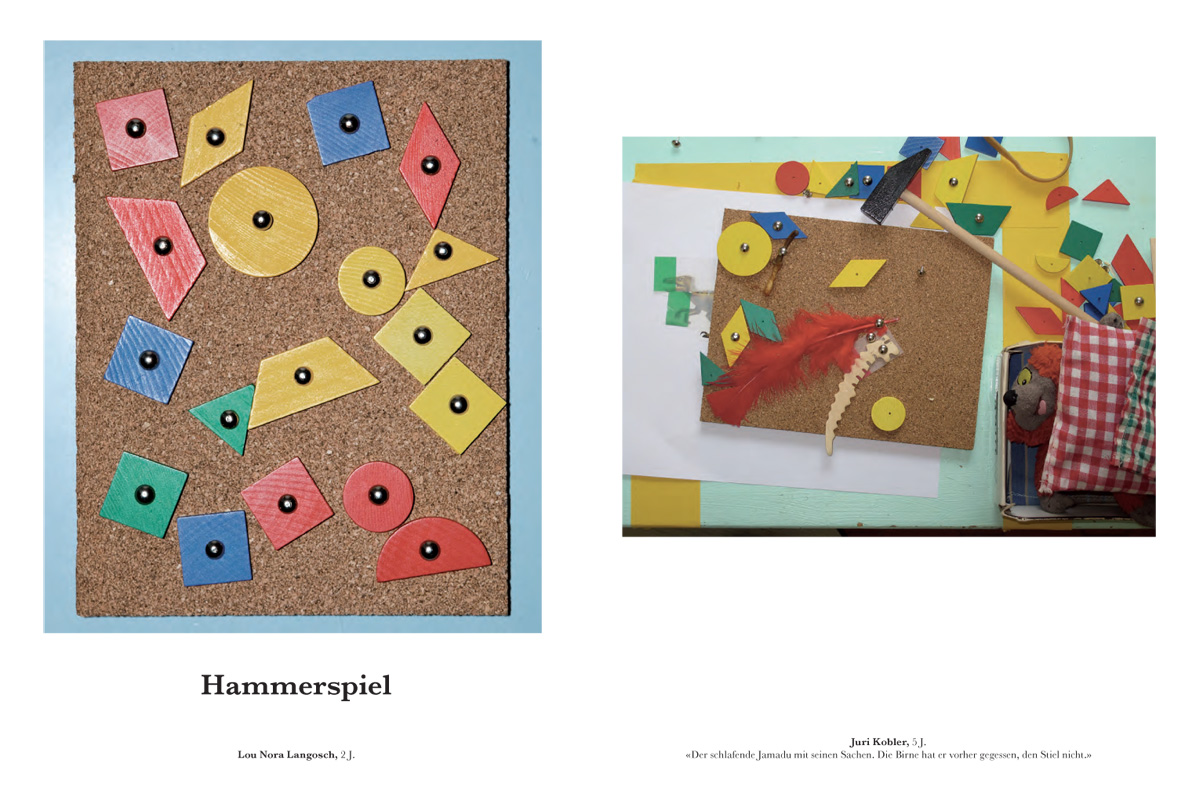
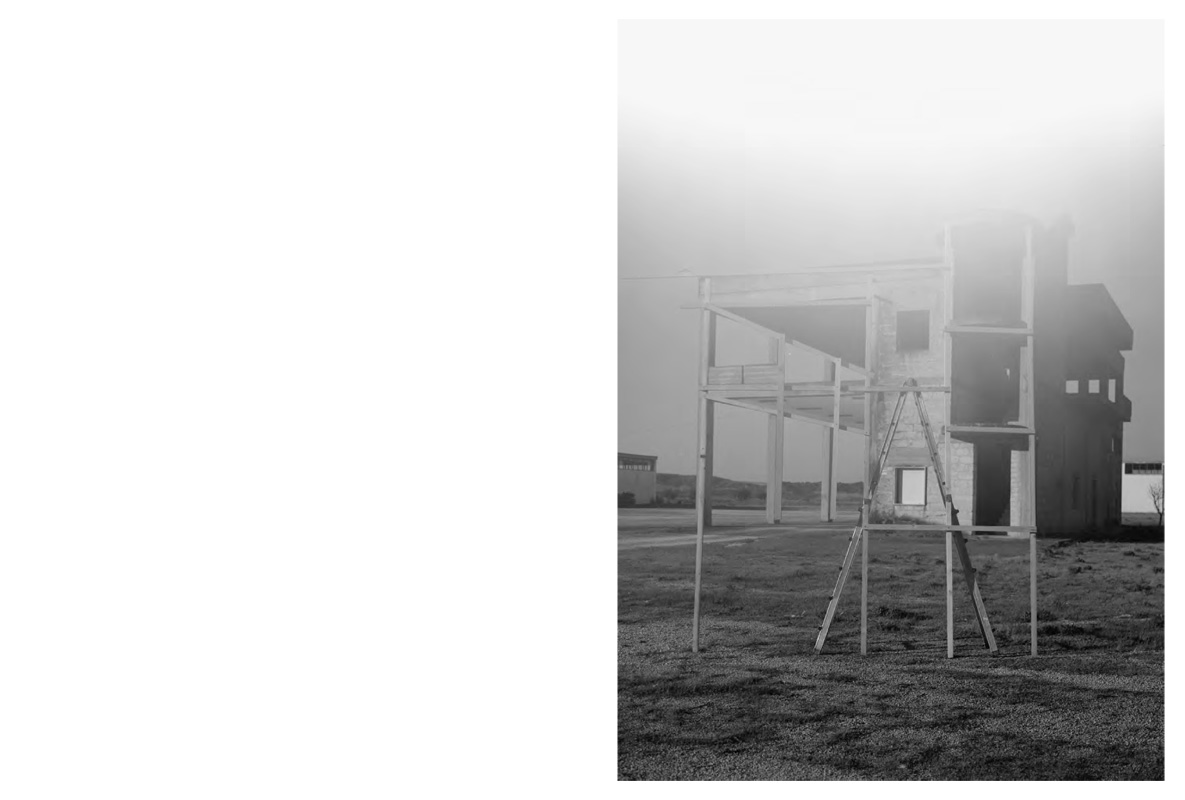
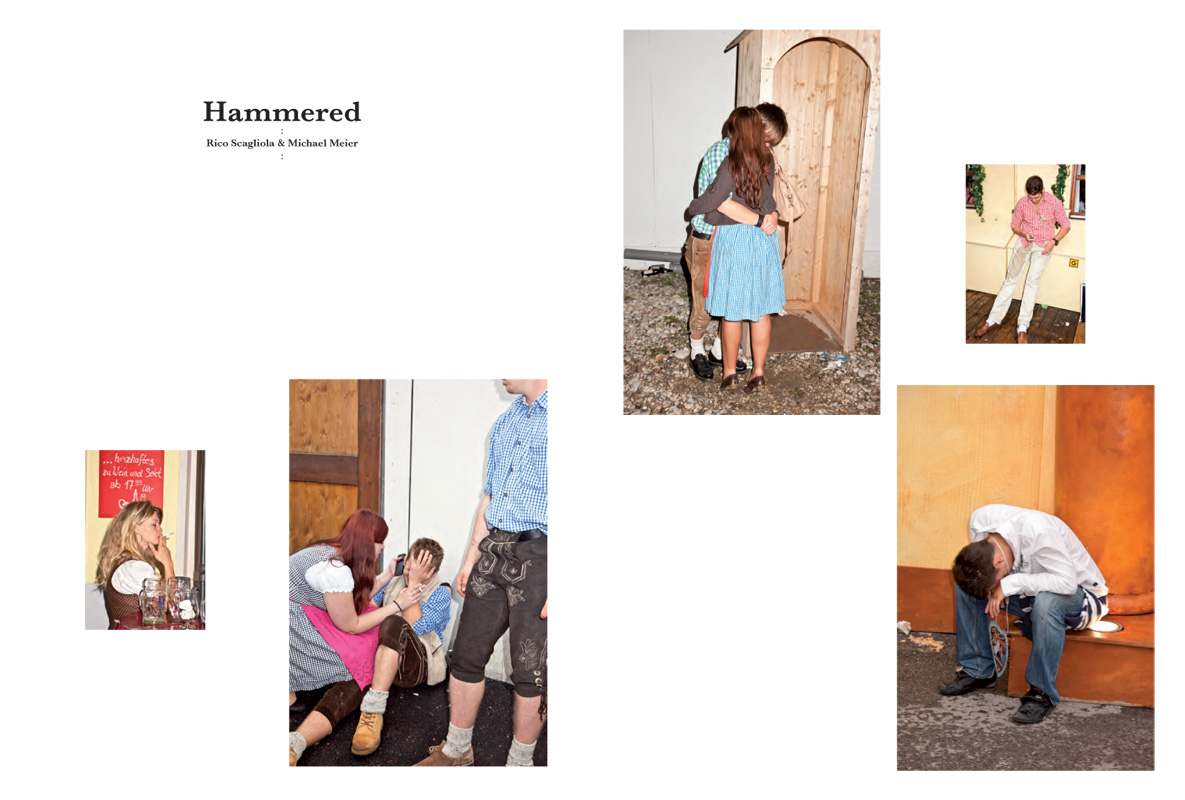
Issue h like hammer
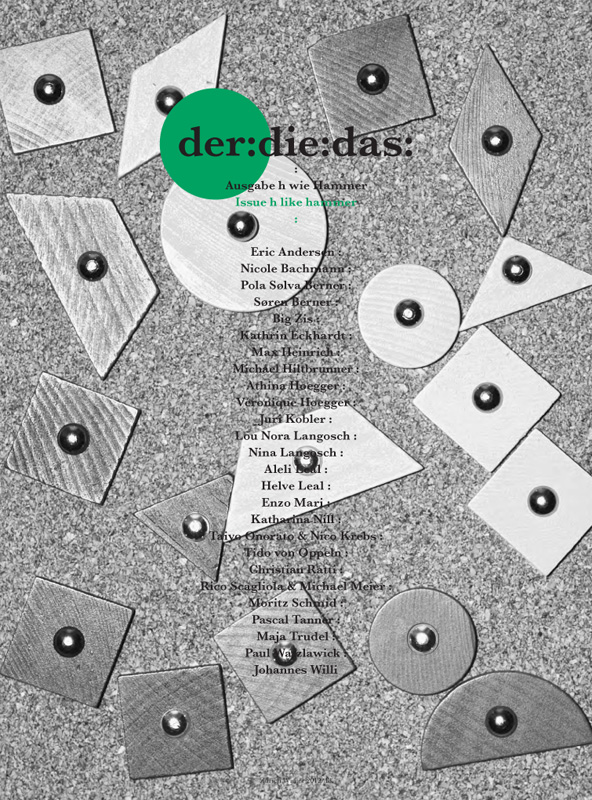
der:die:das:, Issue h like hammer
Softcover, 92 pp., offset 4/4, 200 x 270 mm
English and German
Edition of 1000
ISSN 1663-2508
Published by der:die:das:
$20.00 ·
KALEIDOSCOPE Magazine 17
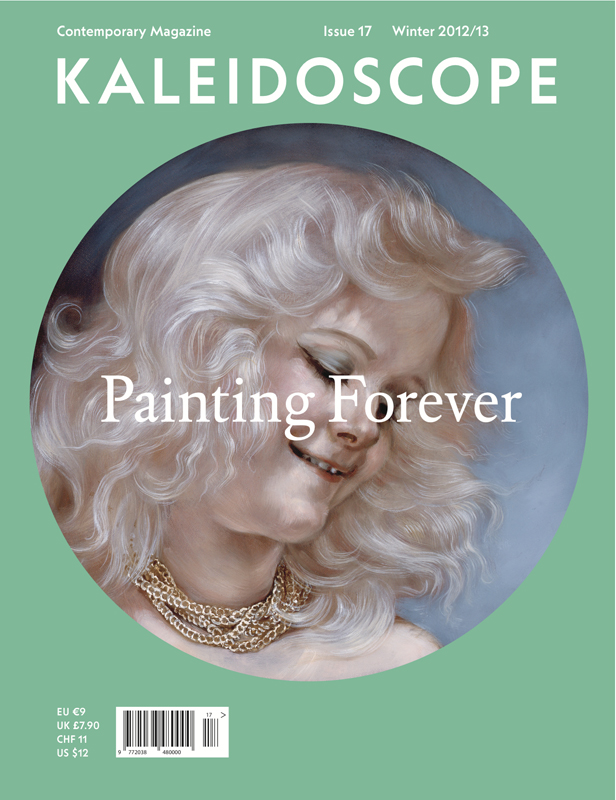
KALEIDOSCOPE Magazine 17, Painting Forever
Winter 2012/2013 — Painting Special Edition
Softcover, 224 pp. + three commissioned inserts, offset 4/4, 220 x 287 mm
ISSN 2038-4807
Published by KALEIDOSCOPE Press
$12.00 ·
HIGHLIGHTS
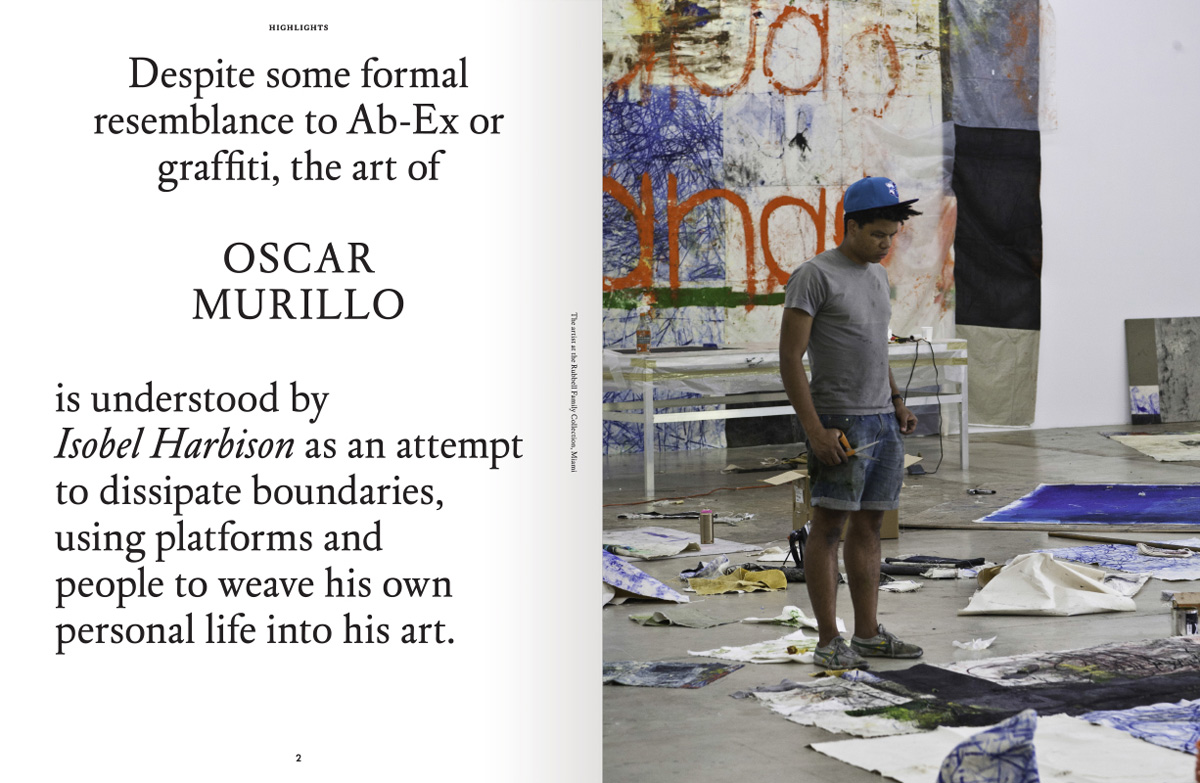
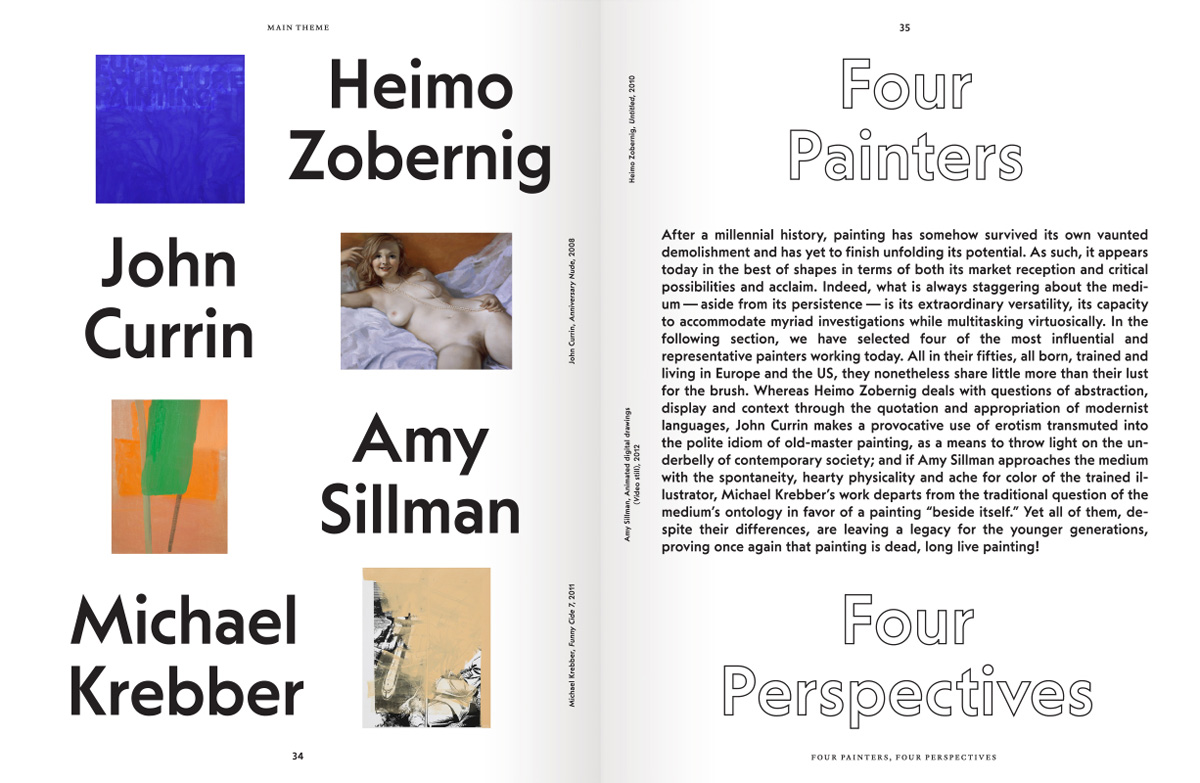
In the opening section we introduce you to the work of five emerging artists: Oscar Murillo, Ryan Sullivan, Allison Katz, Jonathan Binet and Tala Madani. All born in the 1980s in different parts of the world, they’ve chosen to explore, revisit, celebrate and challenge the idea and practice of painting, with a common spirit of engagement and varying degrees of irony and irreverence.
MAIN THEME
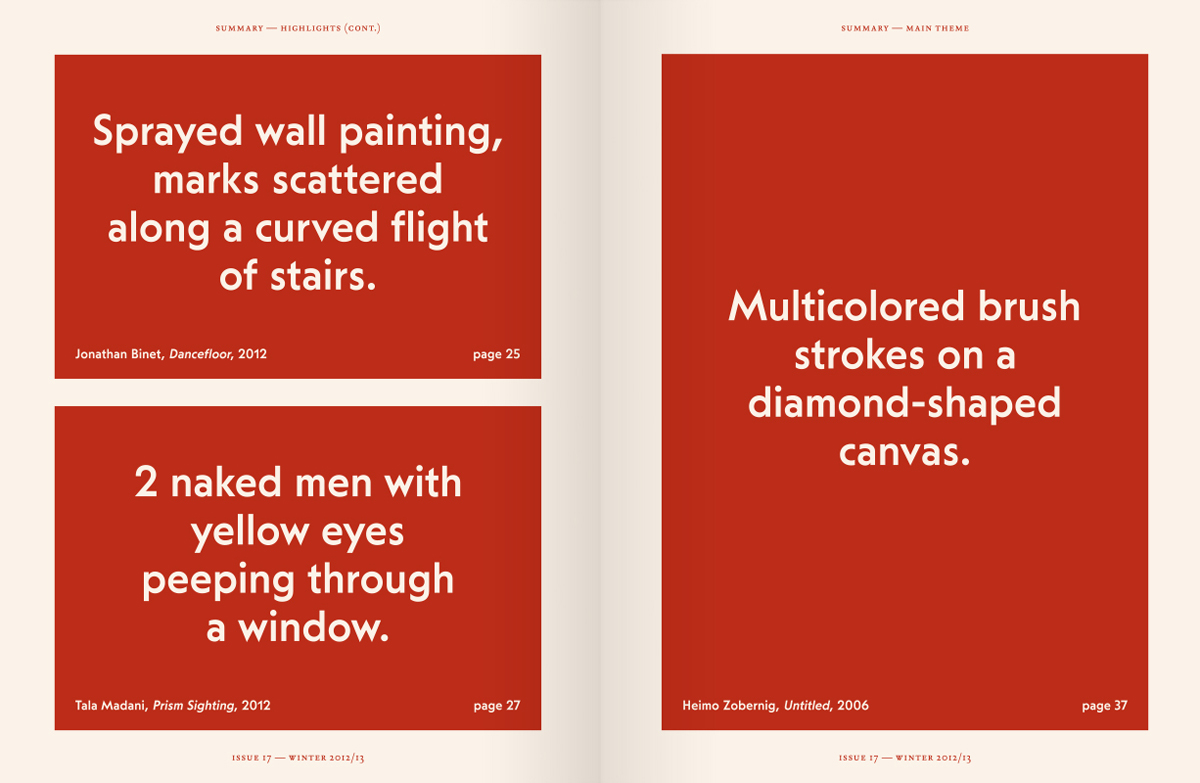
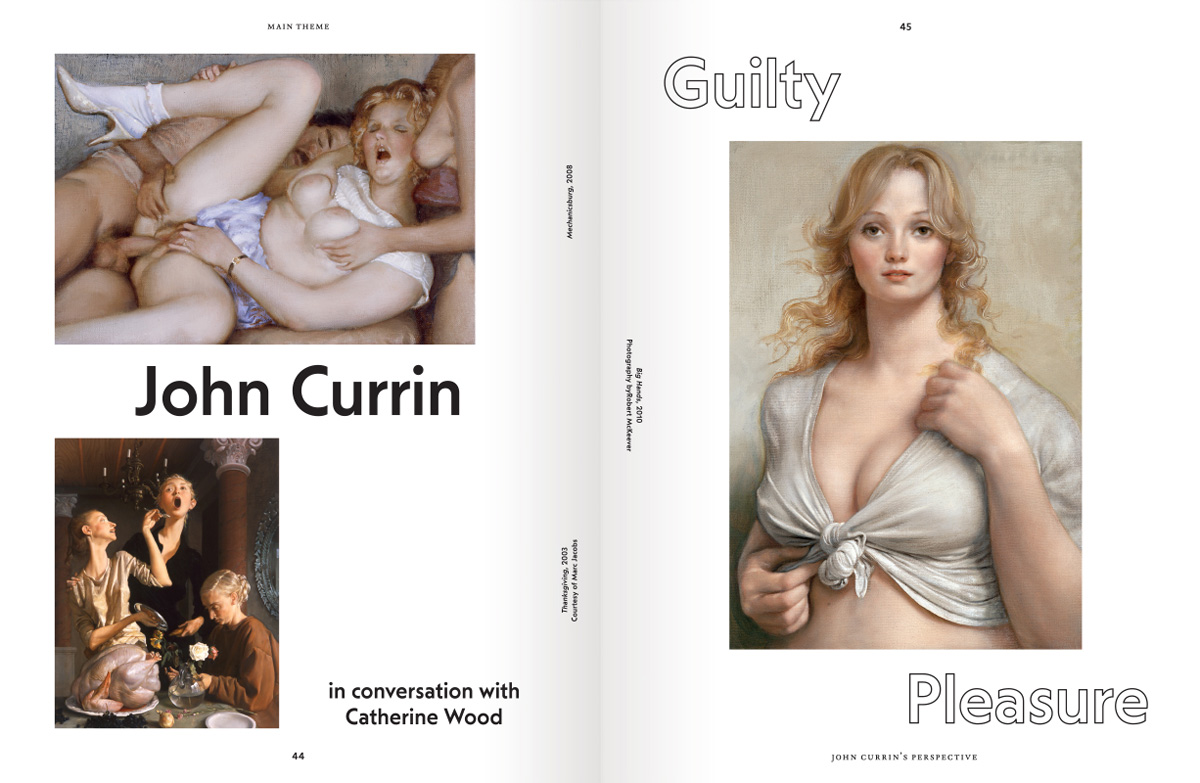
This section, on the other hand, consists of extensive conversations with four artists born between the late 1950s and the early 1960s — Heimo Zoberning, John Currin, Amy Sillman and Michael Krebber — who represent divergent yet equally prominent and visionary approaches to the medium. Their common ground most revealingly lies in the influence they exert on a younger generation of artists. Accordingly, it’s no surprise that three of them hold teaching positions at eminent art schools, including the Academy of Fine Arts in Wien, Columbia University in New York and the Städelschule in Frankfurt.
MONO
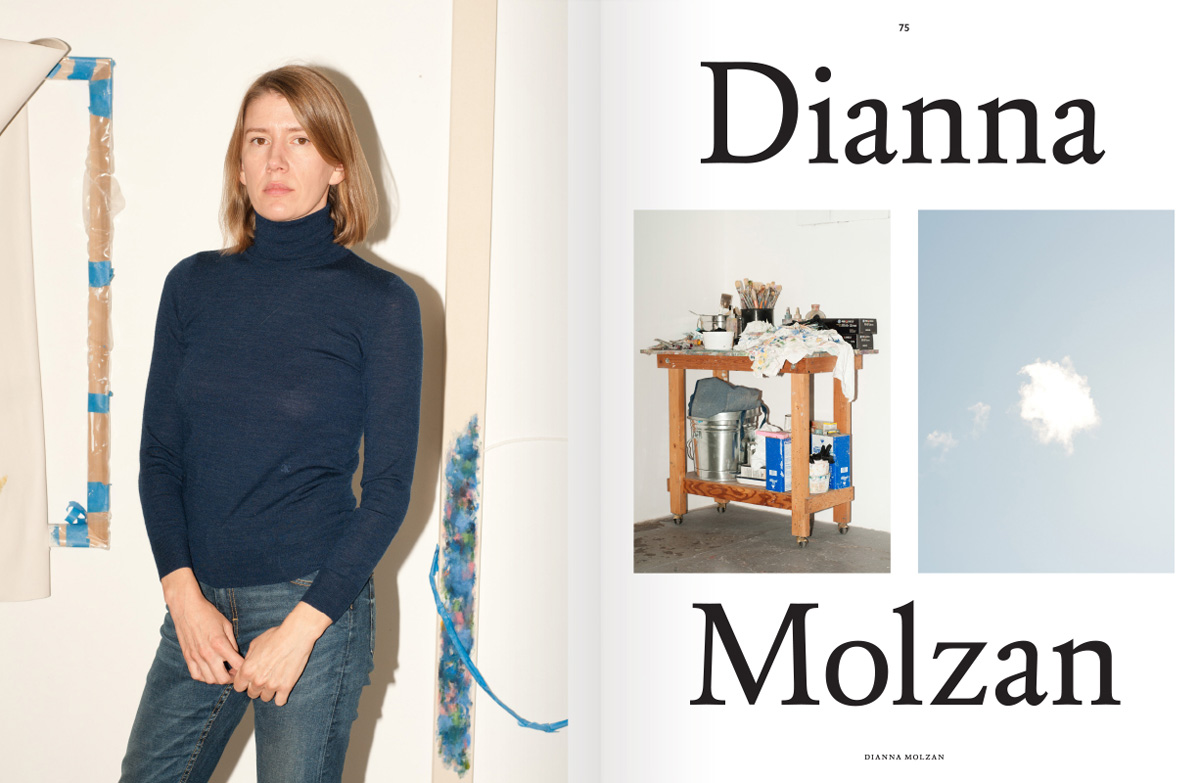
This issue is likewise devoted to a painter, Los Angeles-based artist Dianna Molzan, whose practice occupies the liminal space between two-and three-dimensionality, between “pictures” and “objects,” and whose works convey a sophisticated research on abstraction encompassing elements drawn from the history of painting, as well as from design, fashion and visual culture at large.
REGULARS
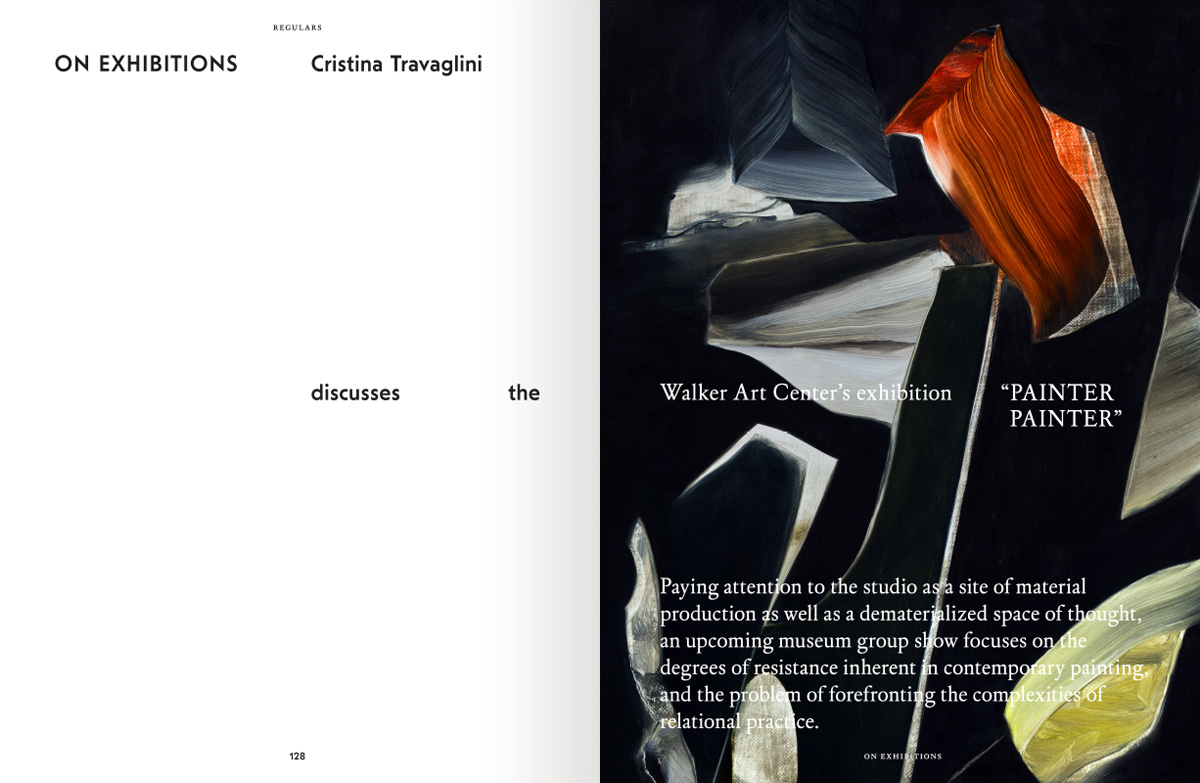
This section features the work of NY–based artist Nikolas Gambaroff and of Italian conceptualist Giorgio Griffa, alongside discussions with the director of a prestigious foundation dedicated to the legacy of Pablo Picasso and the curators of an ambitious group exhibition, “Painter Painter,” soon to open at the Walker Art Center in Minneapolis.
INSERTS
Finally, this issue is enriched with commissioned inserts by three exciting young artists — Marieta Chirulescu, Fredrik Værslev and Keegan McHargue — that have each contributed a unique and affecting visual take on the making and experiencing of painting today.
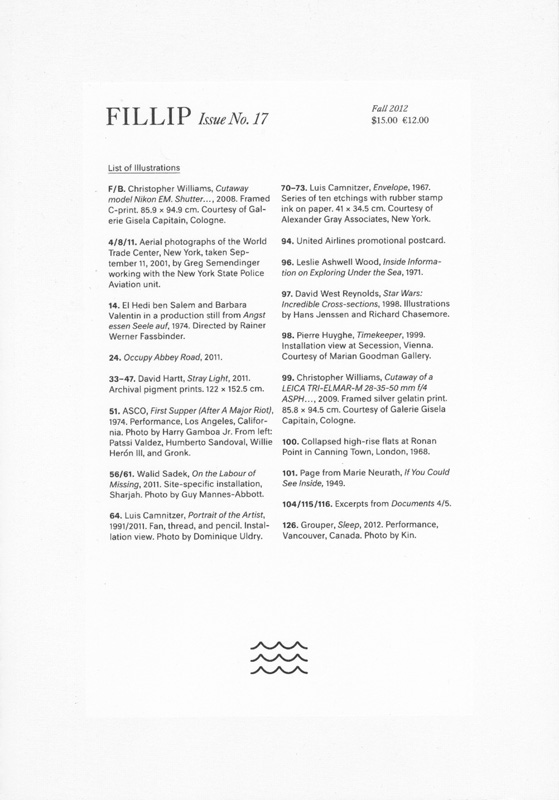
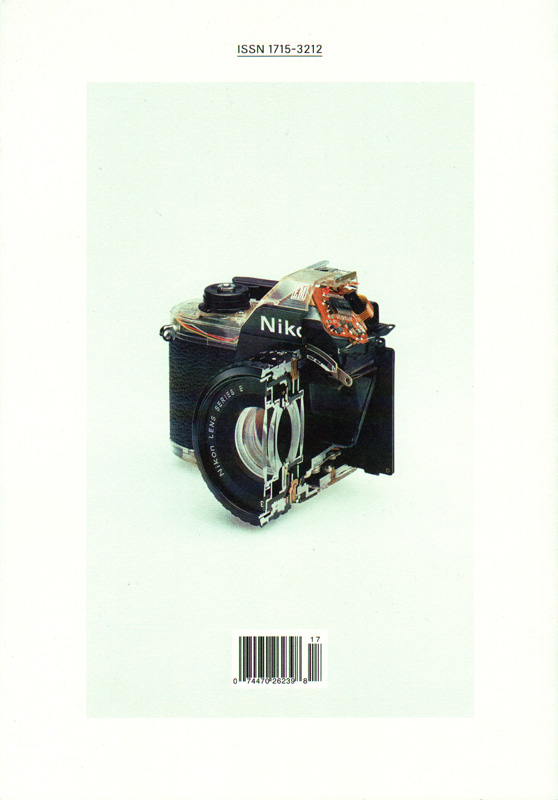
fillip 17
fillip 17
Softcover, 156 pp., offset 4/1, 170 x 245 mm
Edition of 2500
ISSN 1715-3212
ISBN 978-1-927354-07-0
Published by Fillip
$15.00 ·
Taking as its point of departure Giorgio Agamben’s suggestion that subjectivity emerges from the relentless struggle between living beings and the various apparatuses in which they are captured, Apparatus, Capture, Trace, reflects on the links between such apparatuses whose operations today appear increasingly intertwined: photography and biopolitics.
1. Series: Apparatus, Capture, Trace
2. David Geers, Open Call
3. Walid Sadek and Mayssa Fattouh, Tranquility is Made in Pictures
4. David Hartt, Stray Light (Portfolio)
5. Renato Rodrigues da Silva, El Instrumento y Su Obra
6. James Langdo, A Eulogy for the Cutaway
7. Miwon Kwon and Helen Molesworth, Documents Magazine, 1992-2004
8. Caren Kaplan, Aerial Photography as Biopower in the Visual Culture of 9/11
9. Maria Muhle, Imitation of Life: Biopolitics and the Cinematographic Image
C Magazine 116
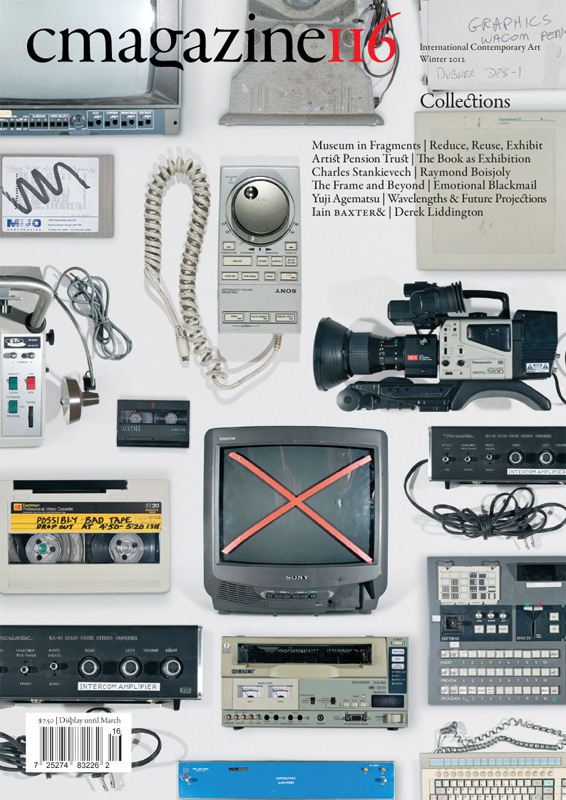
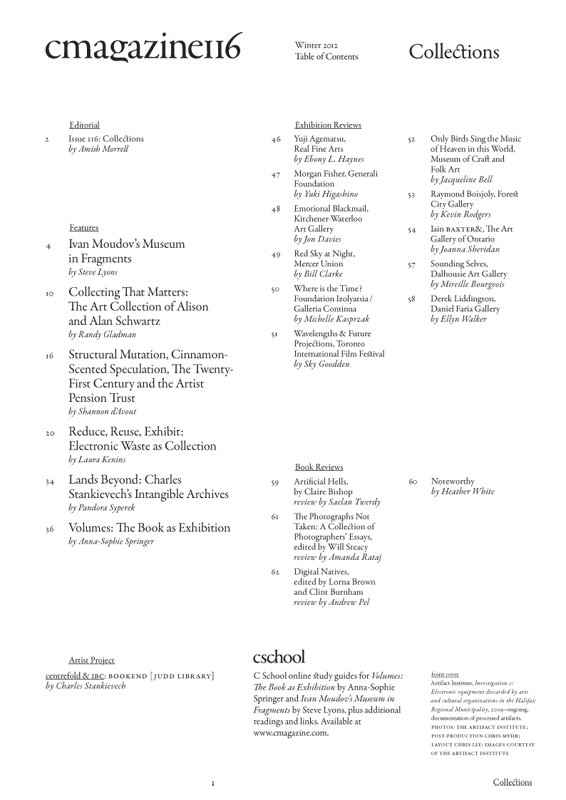
C Magazine 116, Collections
Softcover, 64 pp., offset 4/1, 210 x 295 mm
Edition of 2200
ISSN 1480-5472
Published by C Magazine
$7.50 ·
I’m that angel


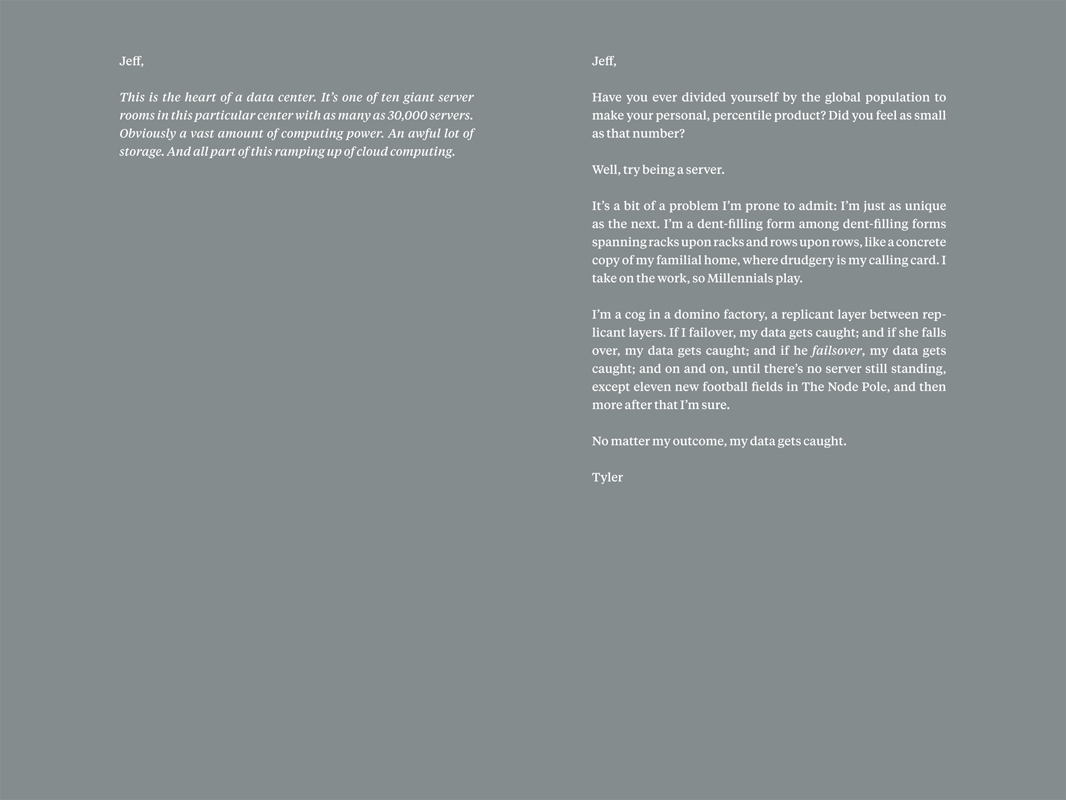
Tyler Coburn, I’m that angel
Softcover, 96 pp., offset 1/1, 6 x 9 inches
Book and performance
Edition of 500
Published by Tyler Coburn
$30.00 ·
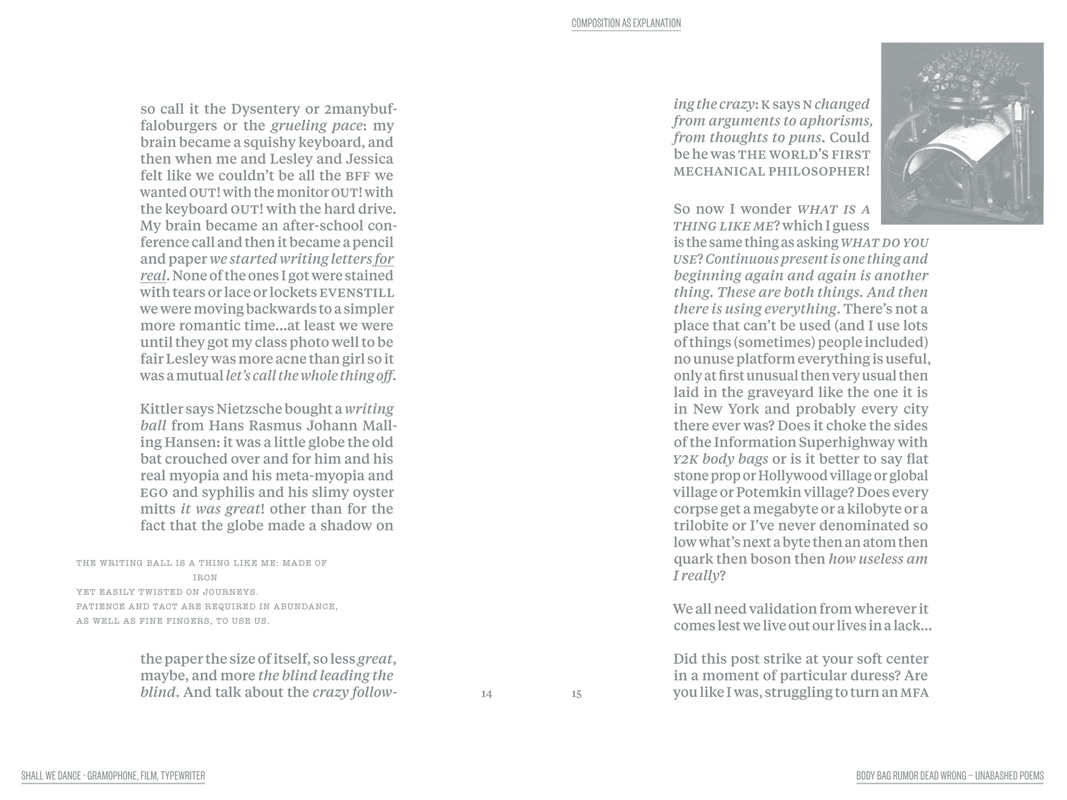
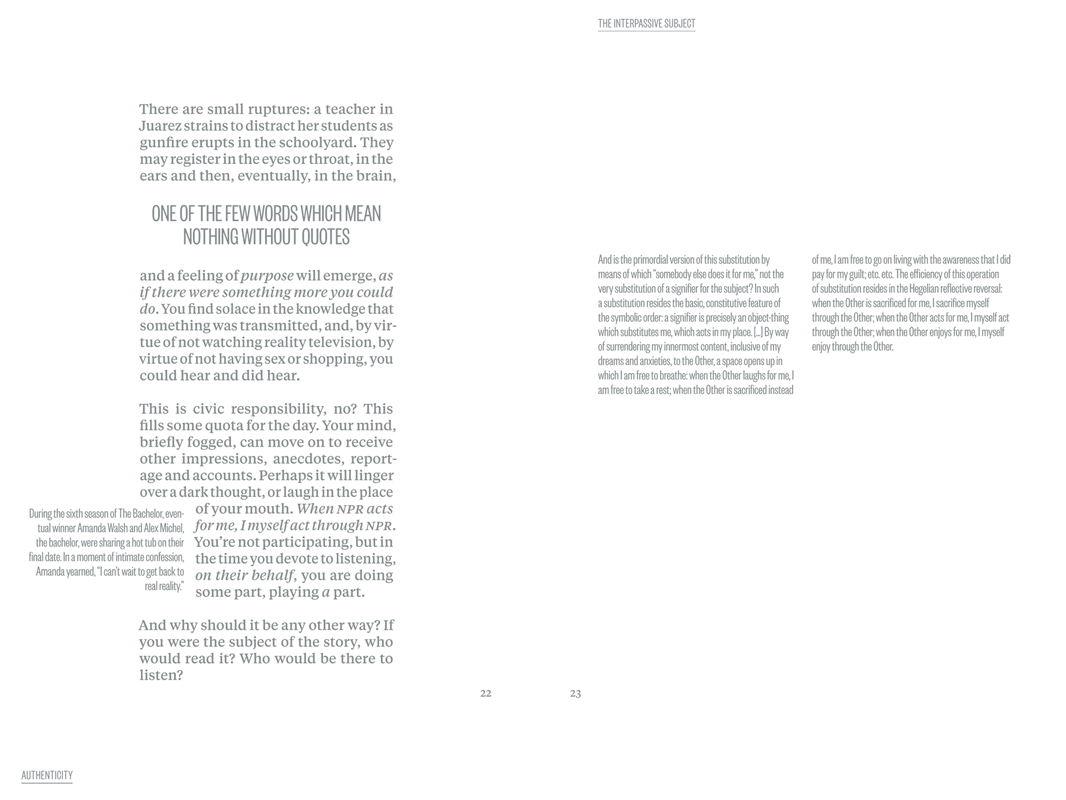
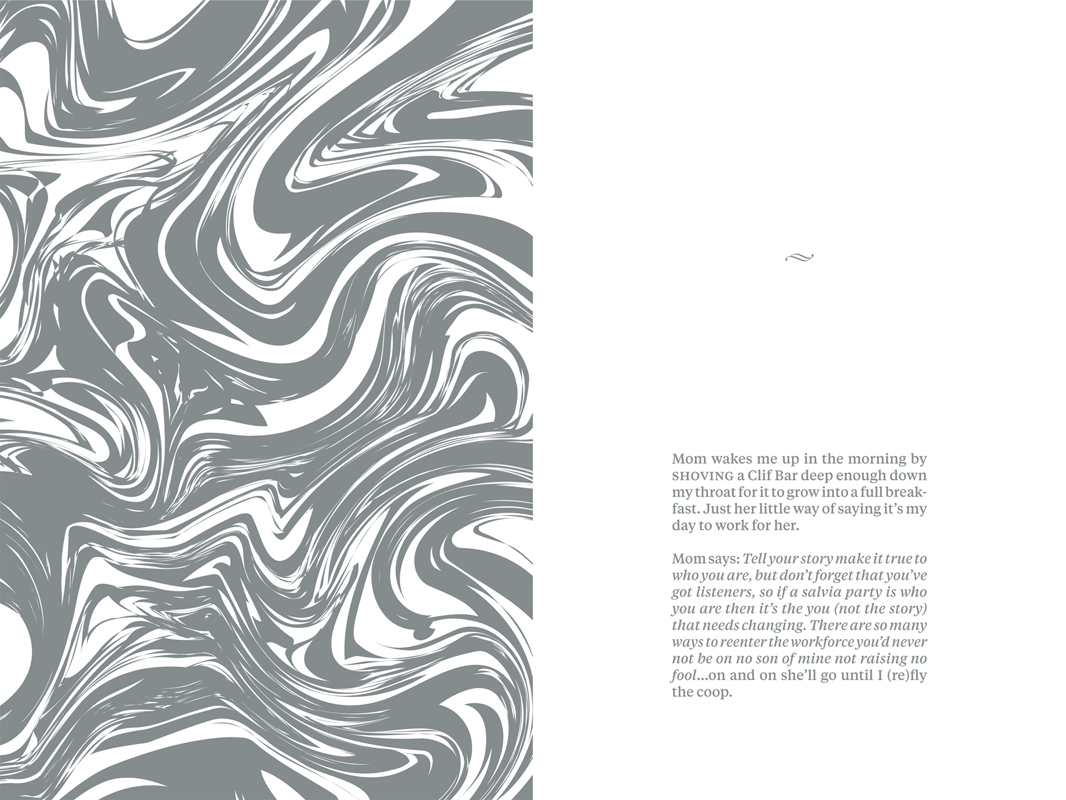
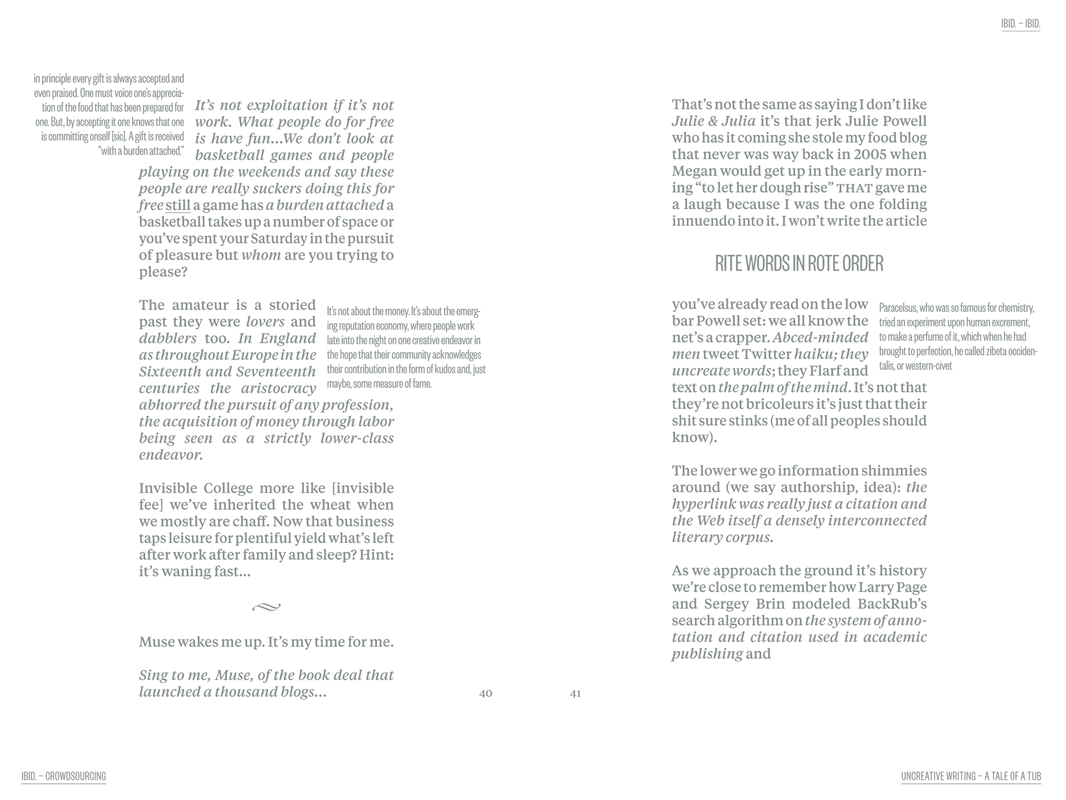
Nodding to the defamiliarization strategies of Russsian formalists like Viktor Shklovskii, I’m that angel takes shape as a stony stone, a cut in the stream – a book. The format concretizes found quotes and other elements; and in every line, a pathology characteristic of our era. Call it inattentionality as method.
Designed by Eric Nylund, this book shores up the bibliographic and citational structures that underpin much of the Internet, as well as literary forms like the confessional and the epistolary that offer precedents for net vernacular. I’m that angel works to build an expanded form of the printed page that draws upon the computer screen’s predecessors: the exegetical framings of The Talmud, for example, and the columnar stutter of Derrida’s Glas. The work attempts, in short, to thread hypertext into a paraliterary matrix.
The second part of this project involves readings of the entire book, performed by actor Justin Sayre, at colocation centers worldwide. If the book sustains a material limit that belies the diffuse shape of the cloud, then these sited readings attempt to effect similar concretions by having author, actor and audience occupy a highly securitized, geopolitical and visual field that is rarely made available to the public. The first such performance occurred, over three nights in April 2012, in an all-glass, octagonal conference room, overlooking racks of servers, at Digital Realty in downtown Los Angeles.


0-052
Publications: Ort (Bücher & Hefte); I Still See Communism Everywhere (Slavs and Tatars); Temporary Storages (The Book Society); A Book About Some People And Time (Myung Feyen); Four Over One (LACMA); Footnote to a Project* (Abraaj Capital Art Prize)
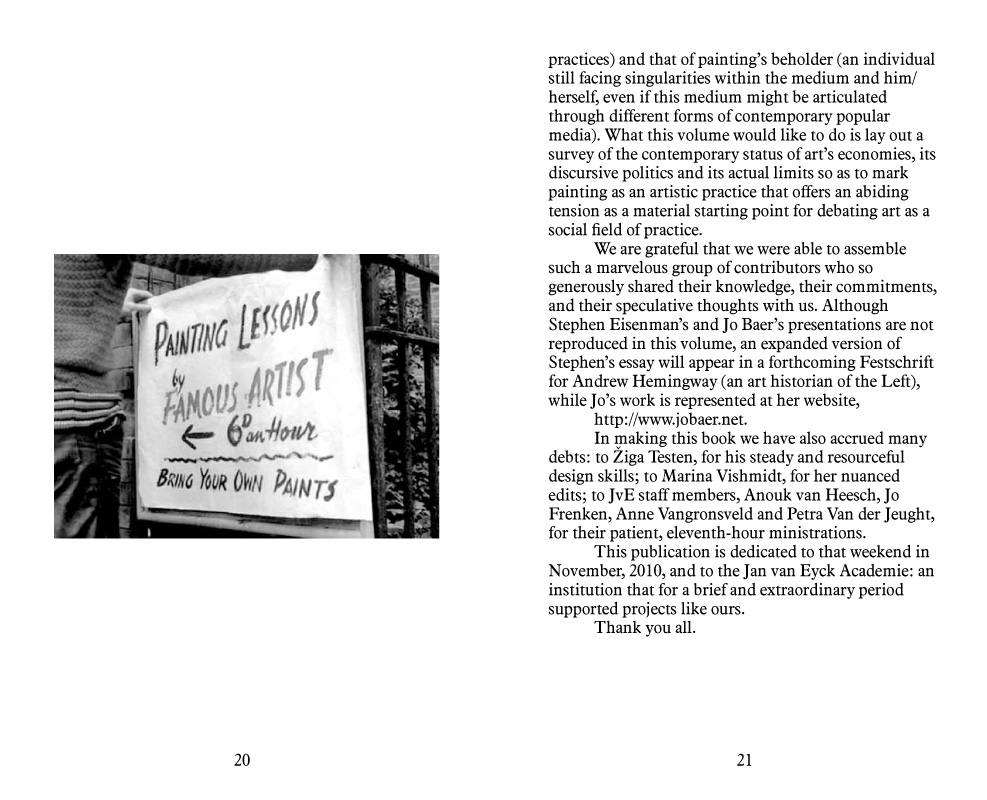
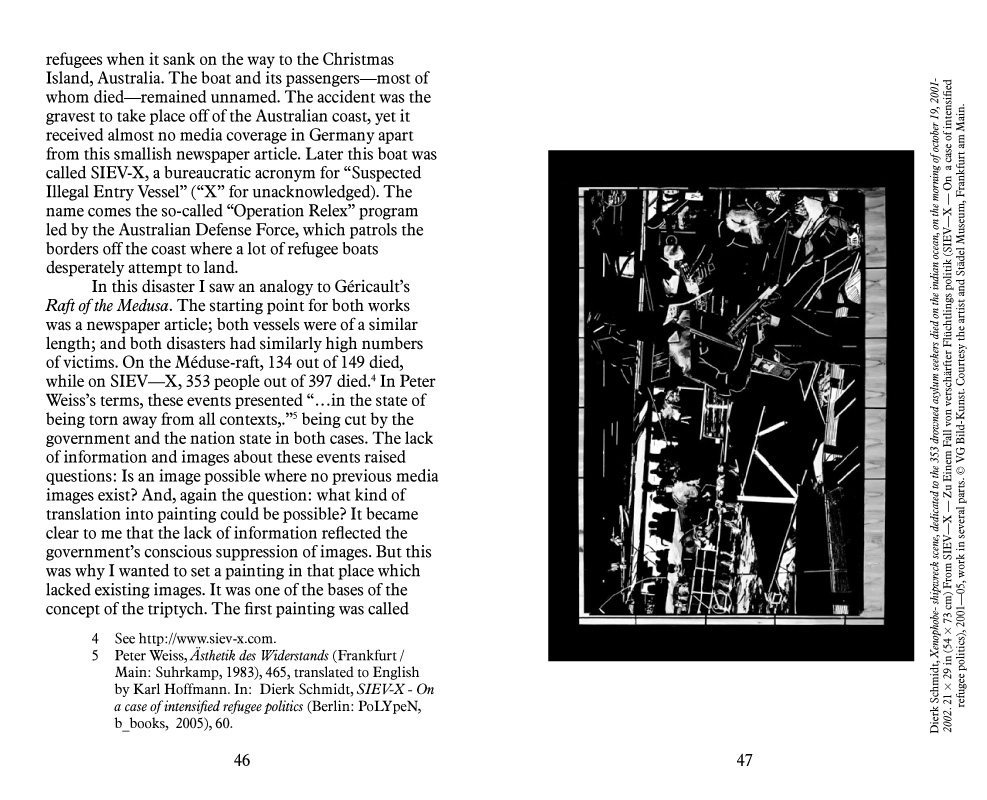
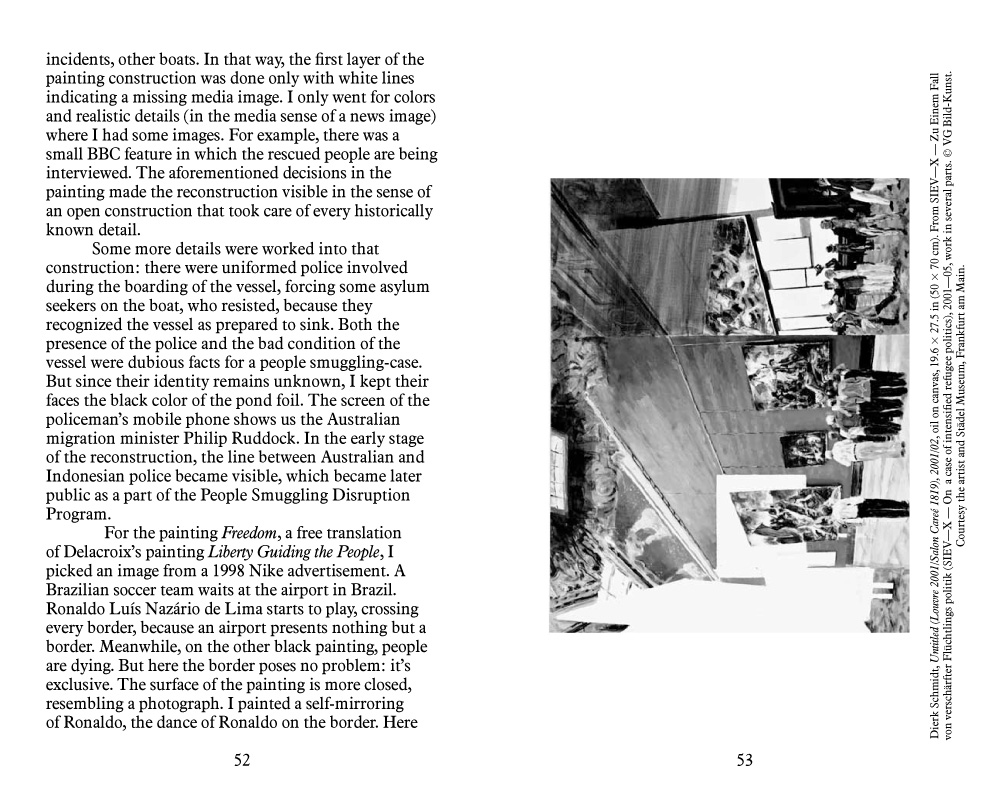
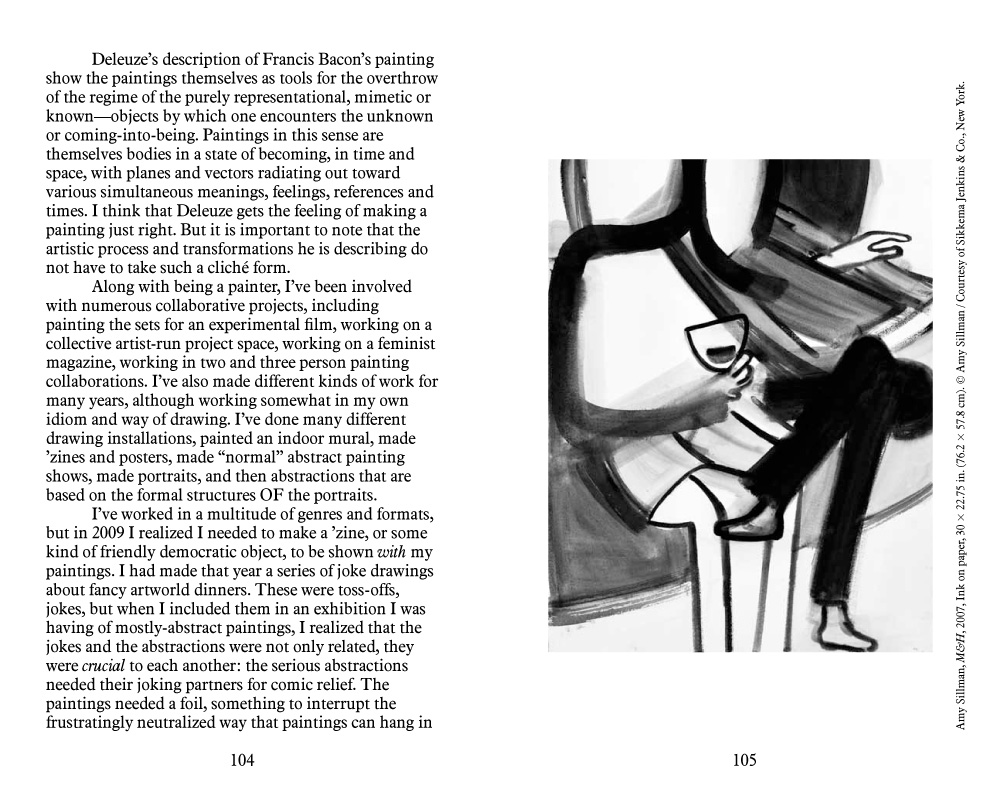
Painting — The Implicit Horizon
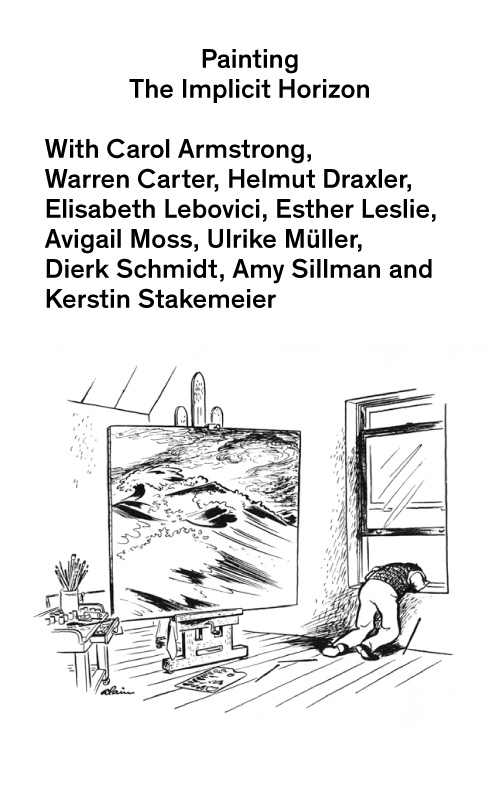
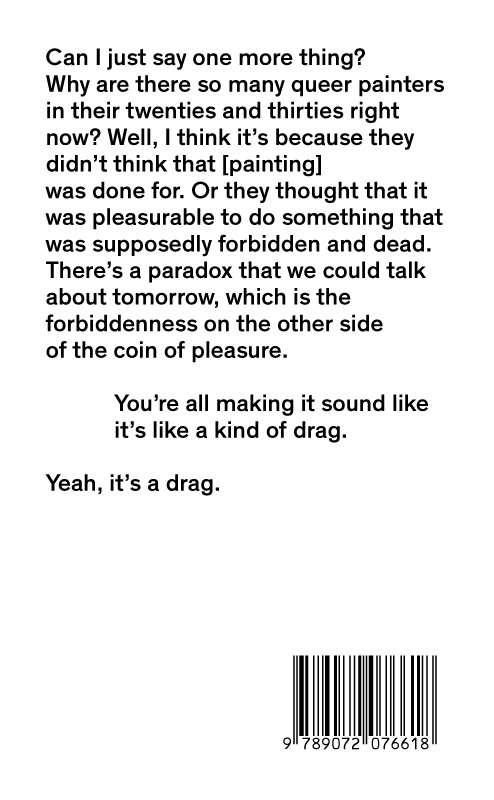
Avigail Moss and Kerstin Stakemeier, Painting — The Implicit Horizon
Softcover, 192 pp., offset 1/1, 110 x 140 mm
Edition of 500
ISBN 978-90-72076-61-8
Published by Jan van Eyck Academie
$11.00 · out of stock
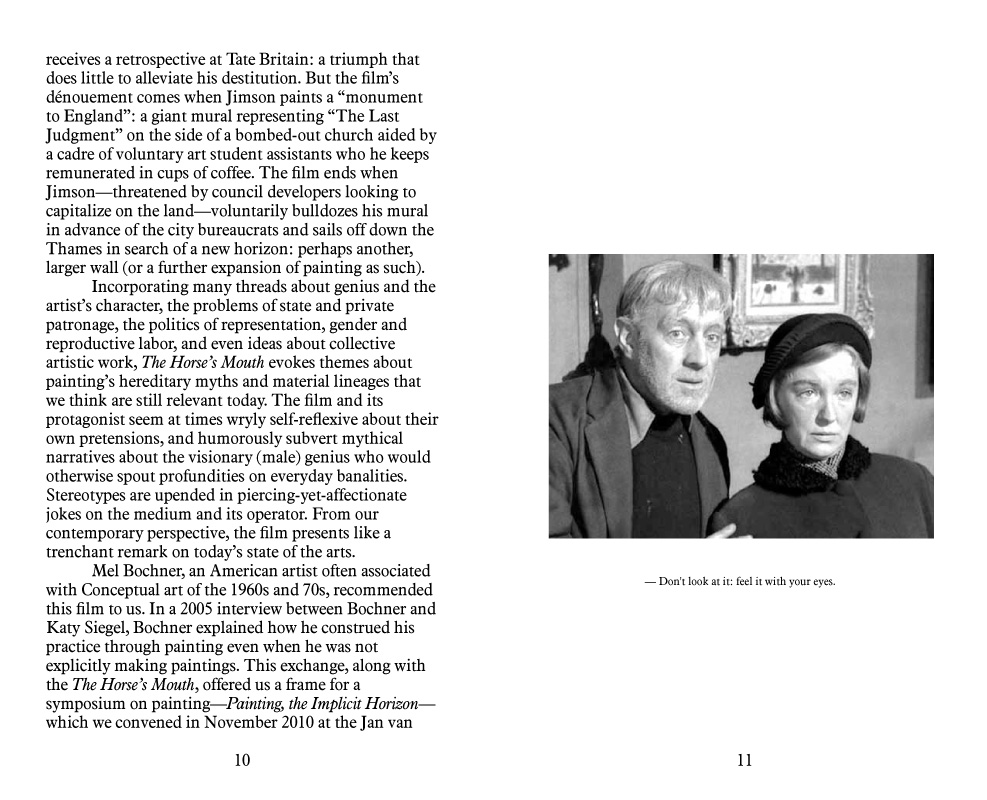
“Jimson lives in a ramshackle houseboat on the Thames river, where he reminisces about the days when the state collected his paintings, hides from the police (who pursue him for his minor infractions and debts) and schemes about how to extract money from various wealthy patrons. That is, his struggles are conceptual, material and financial and always involve a race against time and an acknowledgement of his own limitations even in light of his successes. After a series of roguish scrapes, he finally receives a retrospective at Tate Britain: a triumph that does little to alleviate his destitution. But the film’s dénouement comes when Jimson paints a “monument to England”: a giant mural representing “The last Judgment” on the side of a bombed-out church aided by a cadre of voluntary art student assistants who he keeps remunerated in cups of coffee. The film ends when Jimson — threatened by council developers looking to capitalize on the land — voluntarily bulldozes his mural in advance of the city bureaucrats and sails off down the Thames in search of a new horizon: perhaps another, larger wall (or a further expansion of painting as such).”
CONTRIBUTORS
Carol Armstrong, Warren Carter, Helmut Draxler, Kerstin Stakemeier, Elisabeth Lebovici, Esther Leslie, Avigail Moss, Ulrike Müller, Dierk Schmidt, and Amy Sillman.
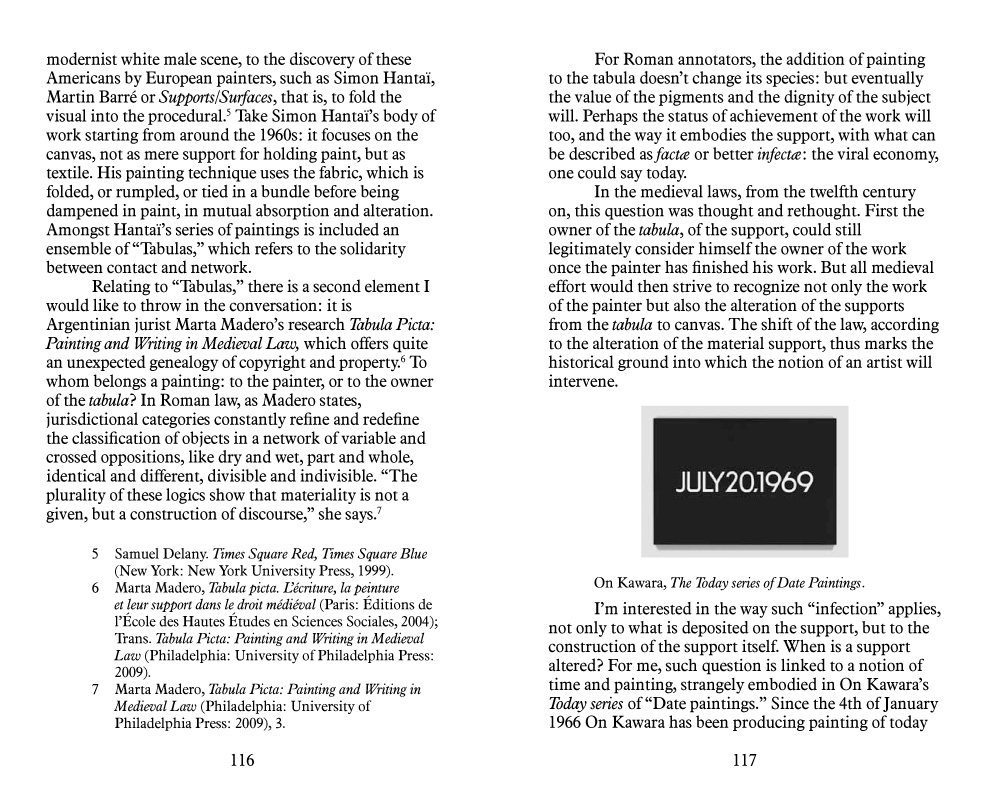
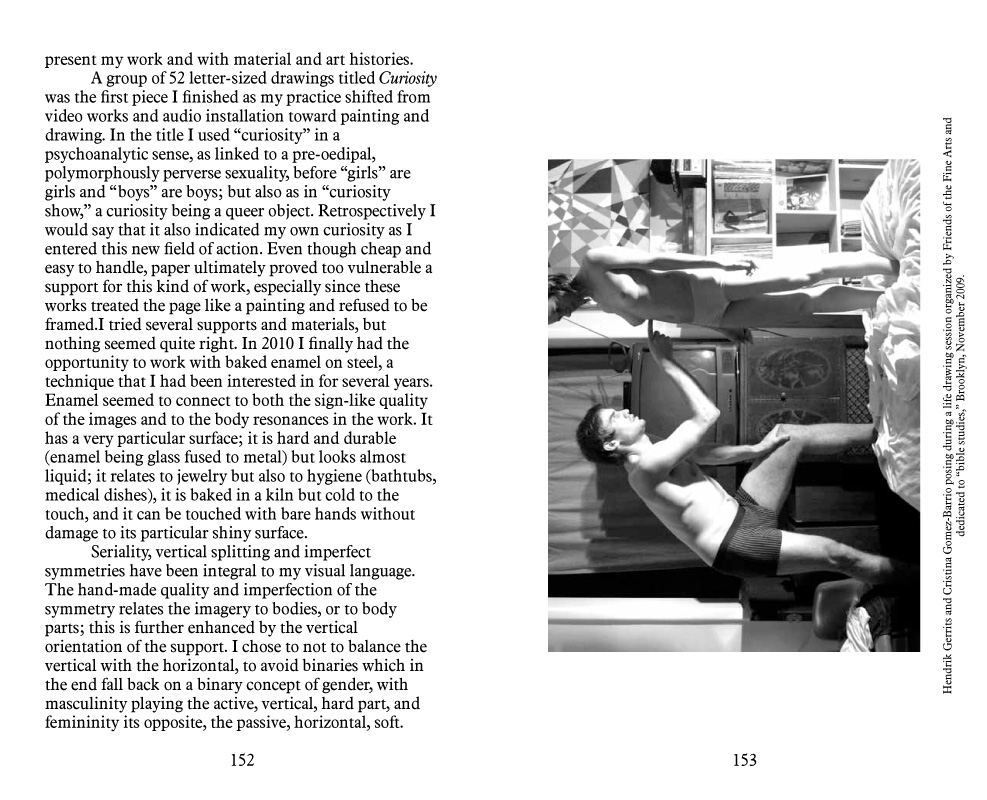
MATERIAL 3
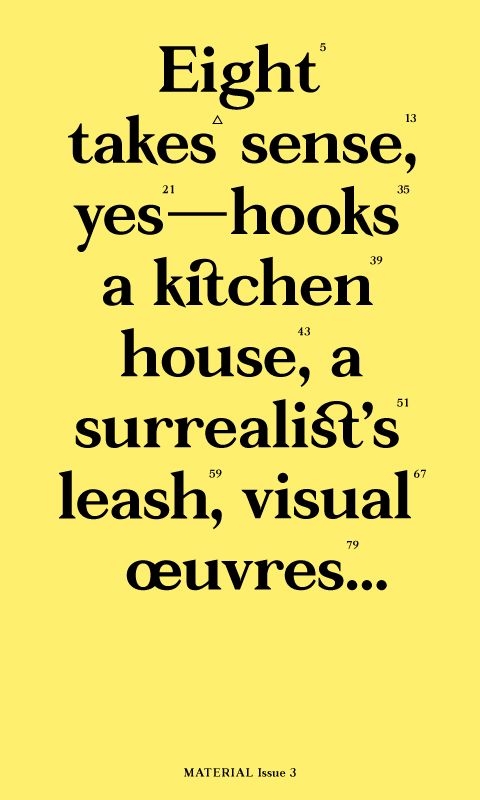

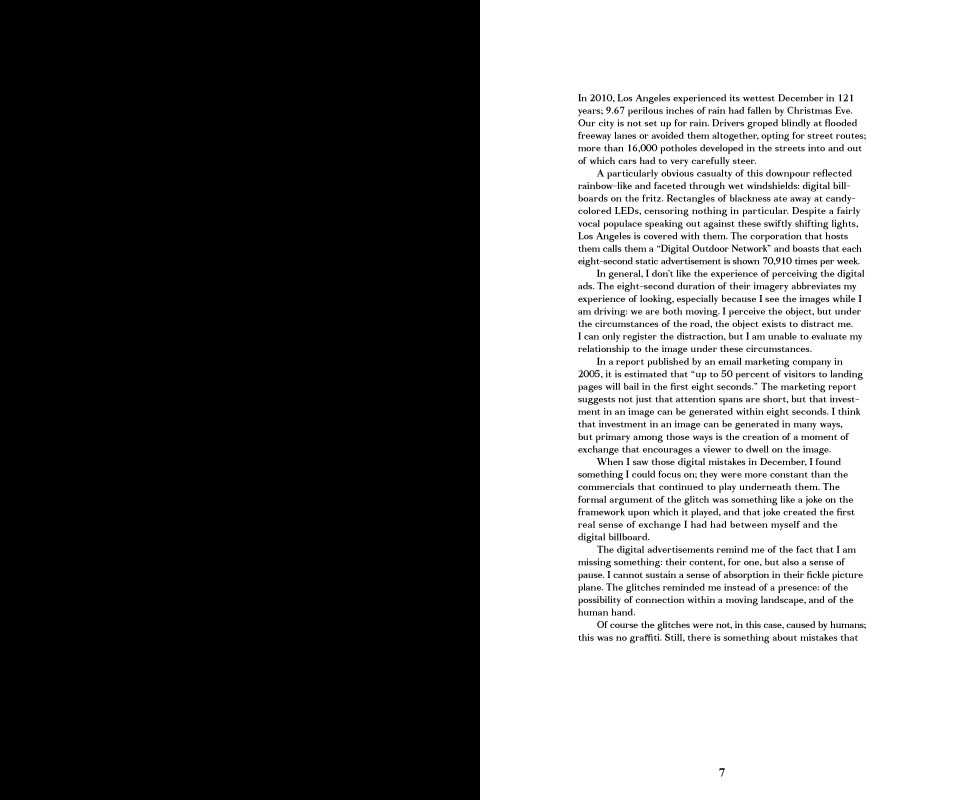
Ginny Cook and Kim Schoen, MATERIAL 3
Softcover, 96 pp. + insert, offset 2/1, 160 x 270 mm
Edition of 500
ISBN 978-0-9801441-2-3
Published by MATERIAL Press
$15.00 ·
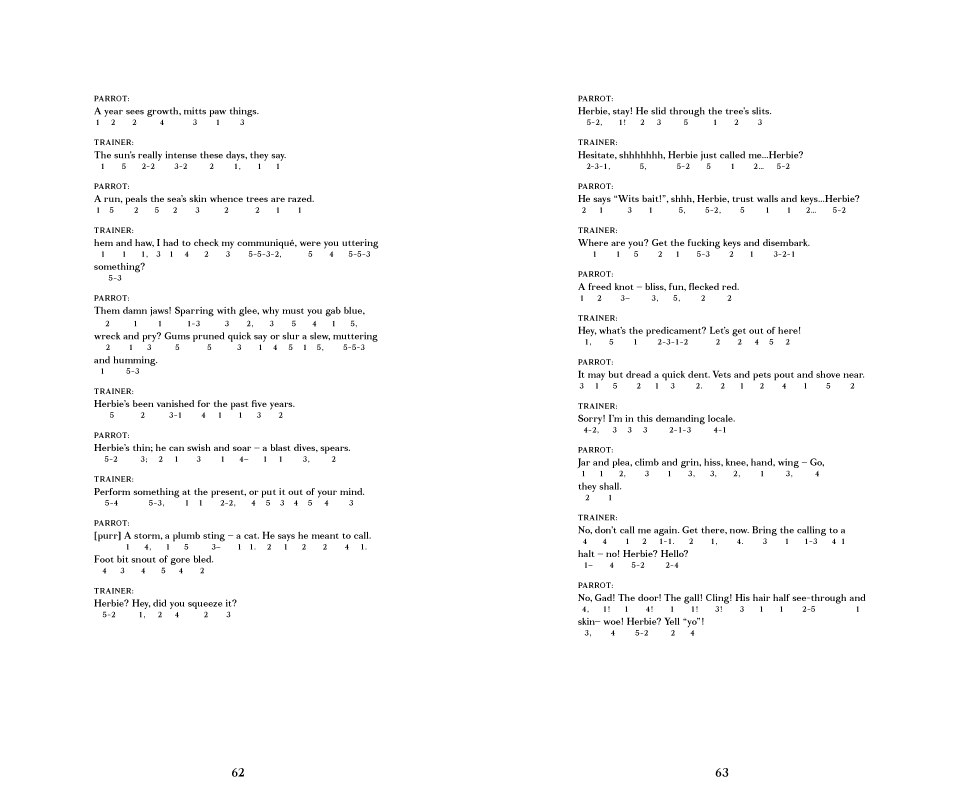
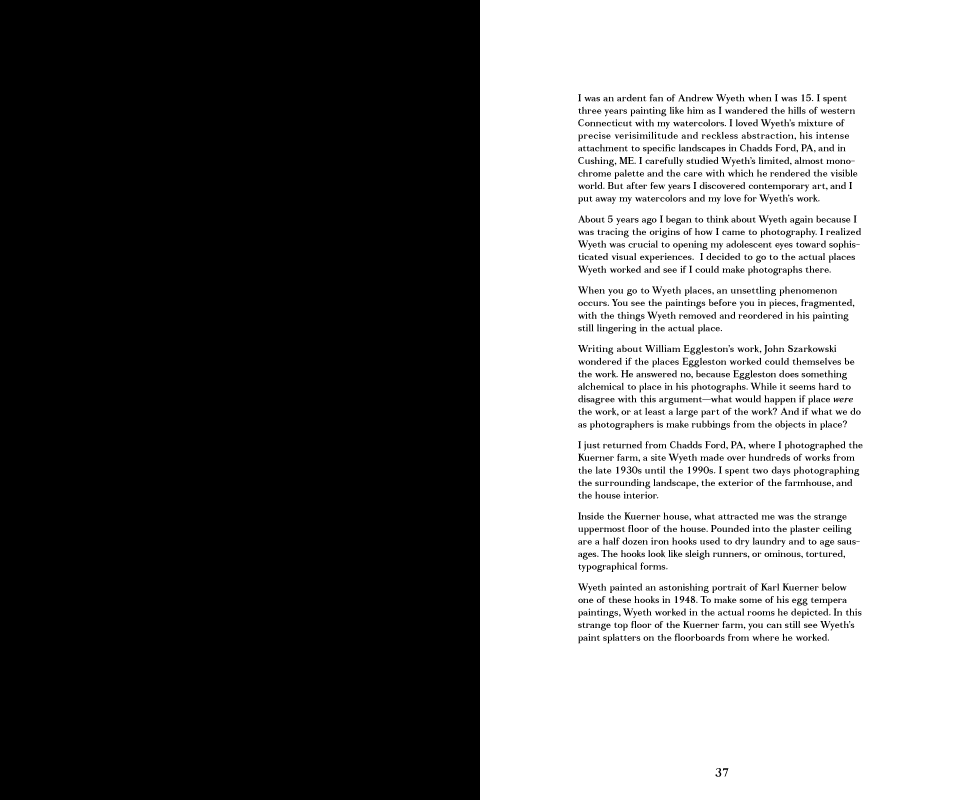
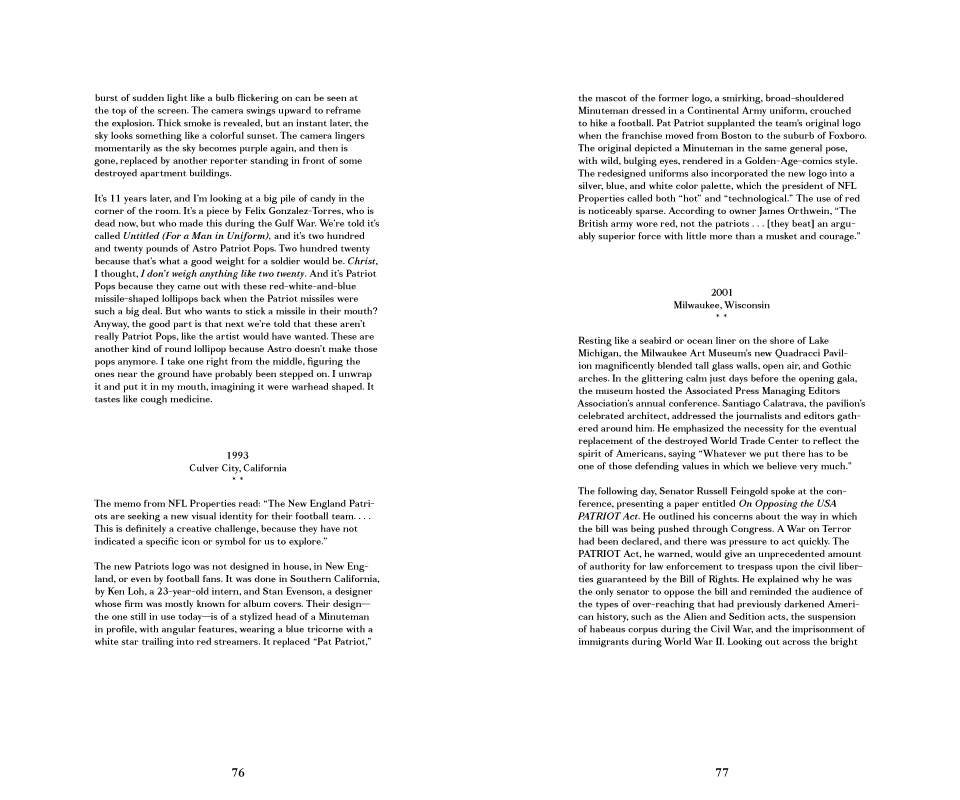
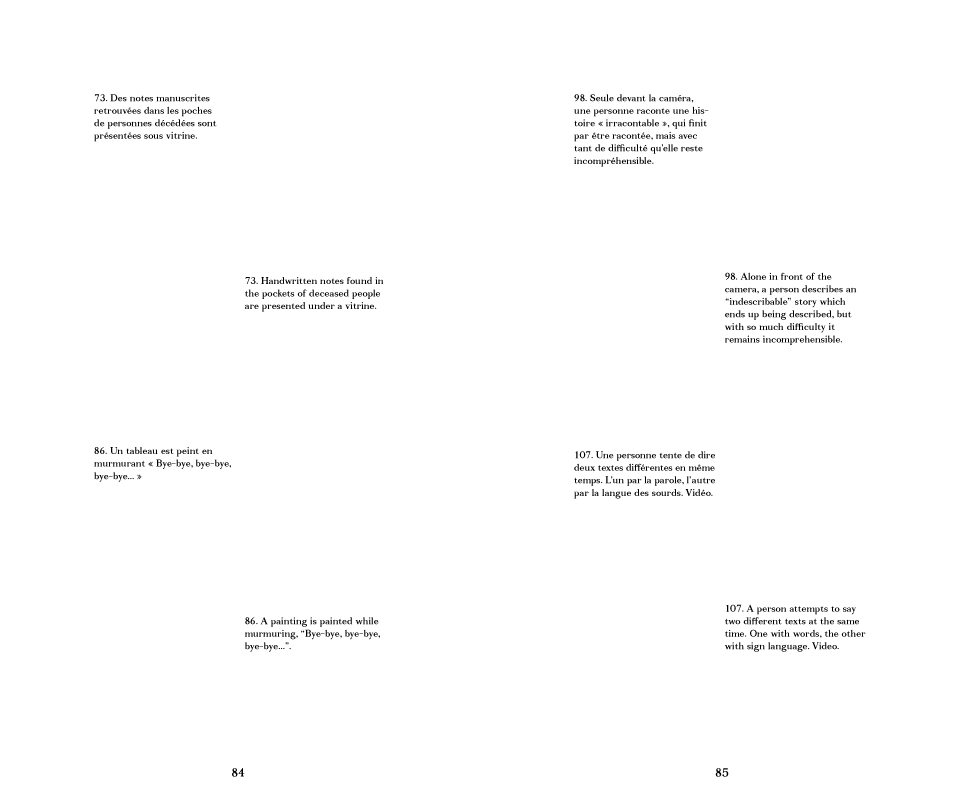
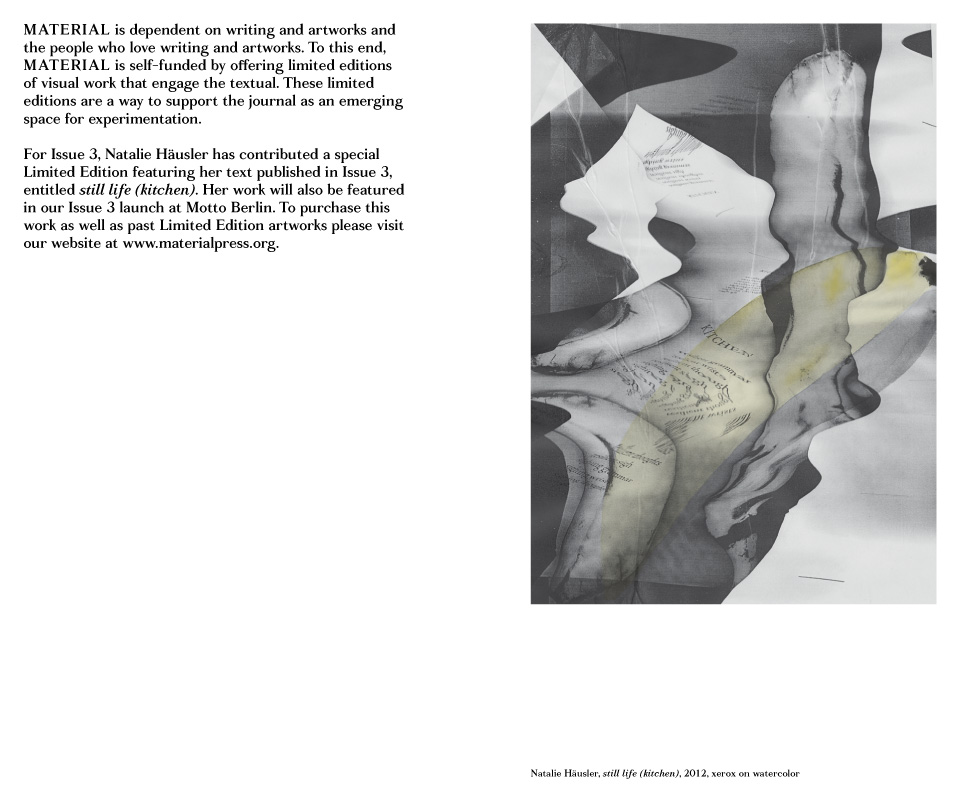
Concatenation (c.1600, from L.L. concatenatus, pp. of concatenare “to link together,” from com- “together”+ catenare, from catena “a chain”) seemed an appropriate word for our editorial method. An unlikely assemblage of texts becomes connected through this process; uncanny linkages emerge. Wyeth appears twice. Performances interact. In this issue: voices that duel, voices that parrot, voices that hypothesize, translate, and meditate, voices that speak simultaneously. As Roland Barthes writes, we have assembled these textual events, as “pleasure in pieces; language in pieces; culture in pieces,” to build upon one another into something new.*
*Roland Barthes, The Pleasure of the Text, trans. Richard Miller (New York: Hill and Wang, 1975), p. 51
CONTRIBUTORS
Farrah Karapetian, Paul Zelevansky, Renee Petropoulous, Nate Harrison, James Welling, Natalie Häusler, Harold Abramowitz, Shana Lutker Stephanie Taylor, Alice Könitz, Frank Chang, and Emily Mast.
KALEIDOSCOPE Magazine 16
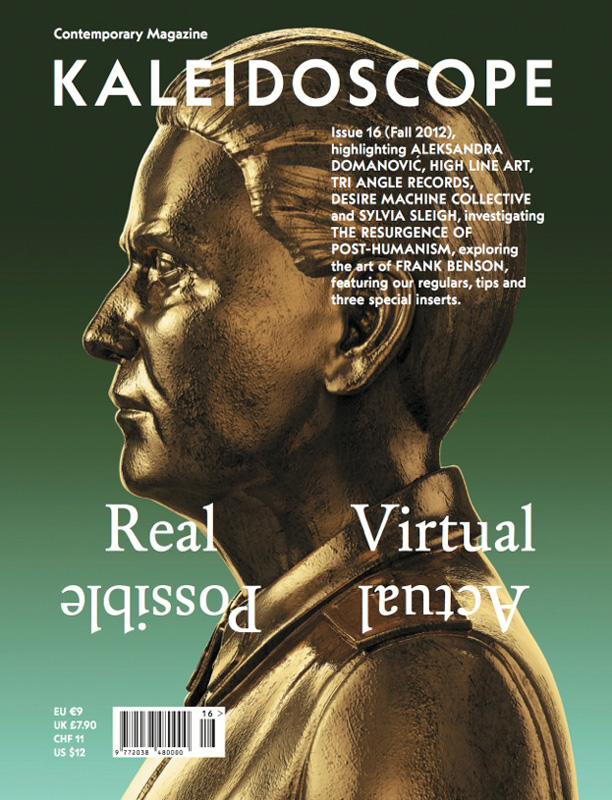
KALEIDOSCOPE Magazine 16 — Fall 2012
Softcover, 210 pp. + Ken Price Drawings insert, offset 4/4, 220 x 287 mm
ISSN 2038-4807
Published by KALEIDOSCOPE Press
$12.00 ·
HIGHLIGHTS
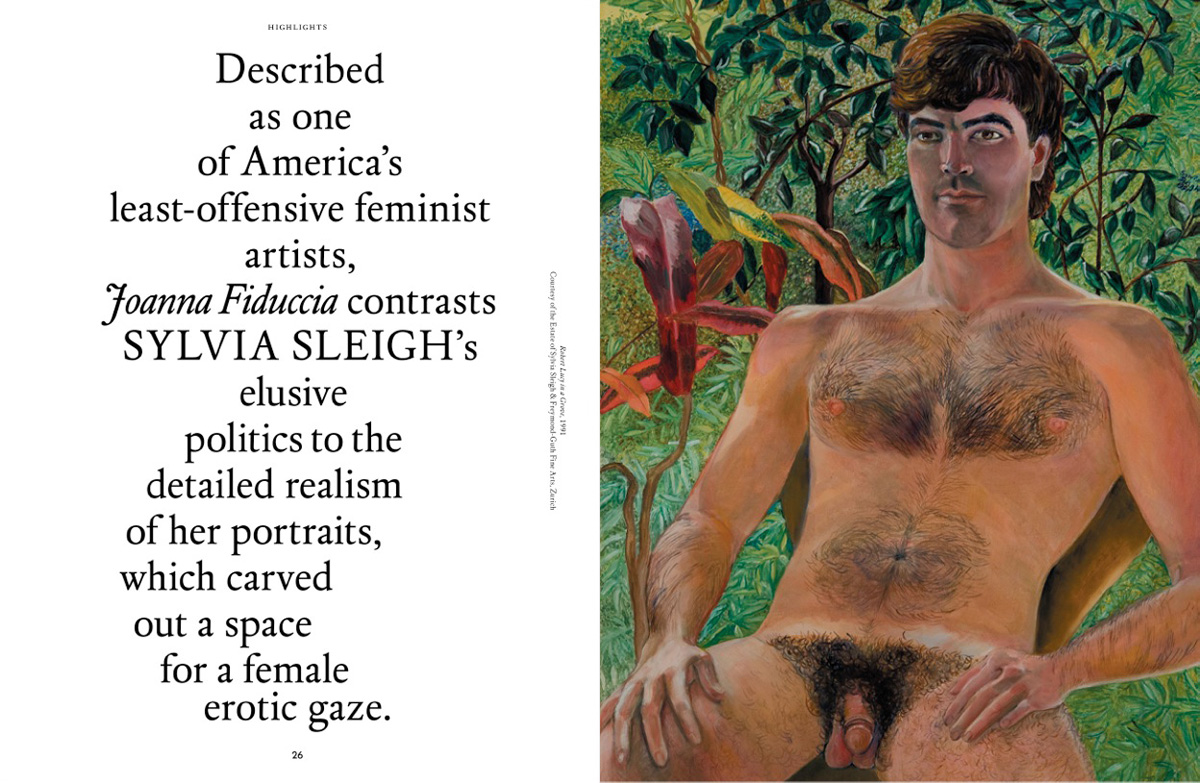
This issue’s opening section features Aleksandra Domanovic, whose videos and sculptures are seen by Pablo Larios as embodiments of the perpetually productive disunion of politics and art; the ambitious public art program of New York’s High Line, described by Piper Marshall as one that confronts artists with many challenges; the record label Tri Angle, whose founder Robin Carolan talks to Ruth Saxelby about how to embody the zeitgeist of electronic music; the Indian duo Desire Machine Collective, who discuss with Sandhini Poddar and Ulrich Baer about mapping an experimental history of colonization; and American painter Sylvia Sleigh, whose elusive politics is contrasted by Joanna Fiduccia to the detailed realism of her portraits.
MAIN THEME
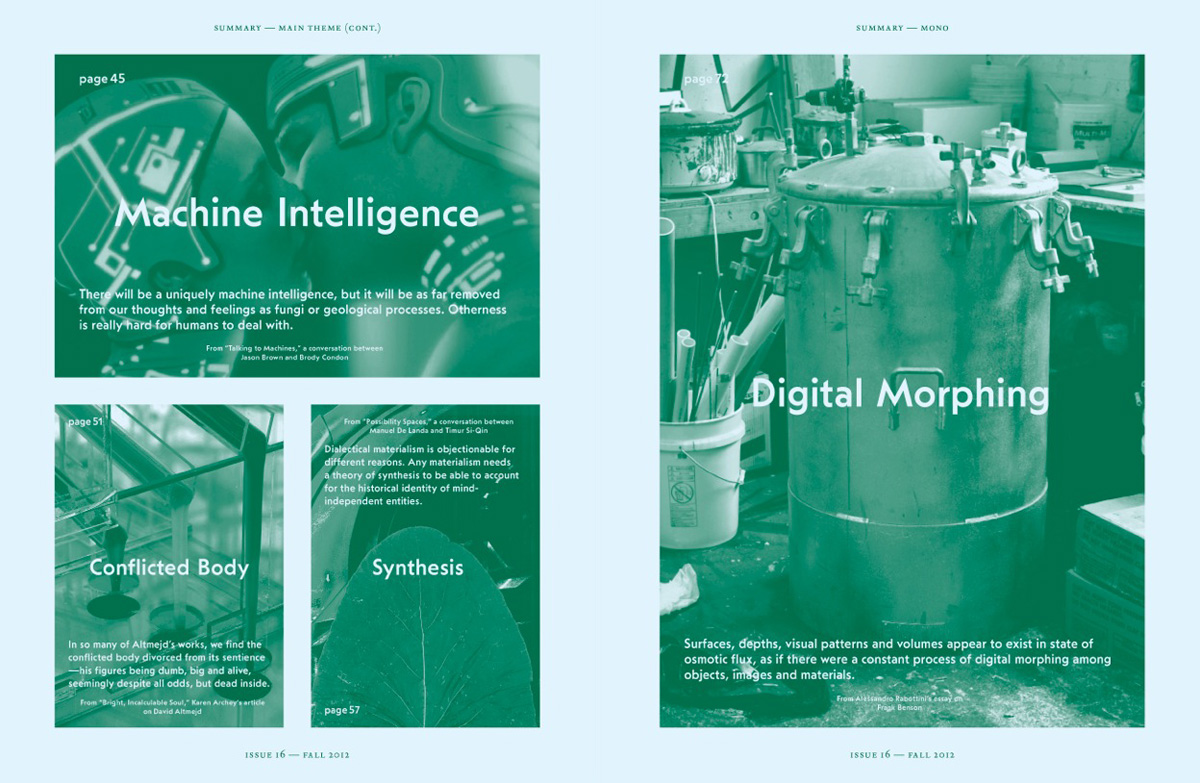
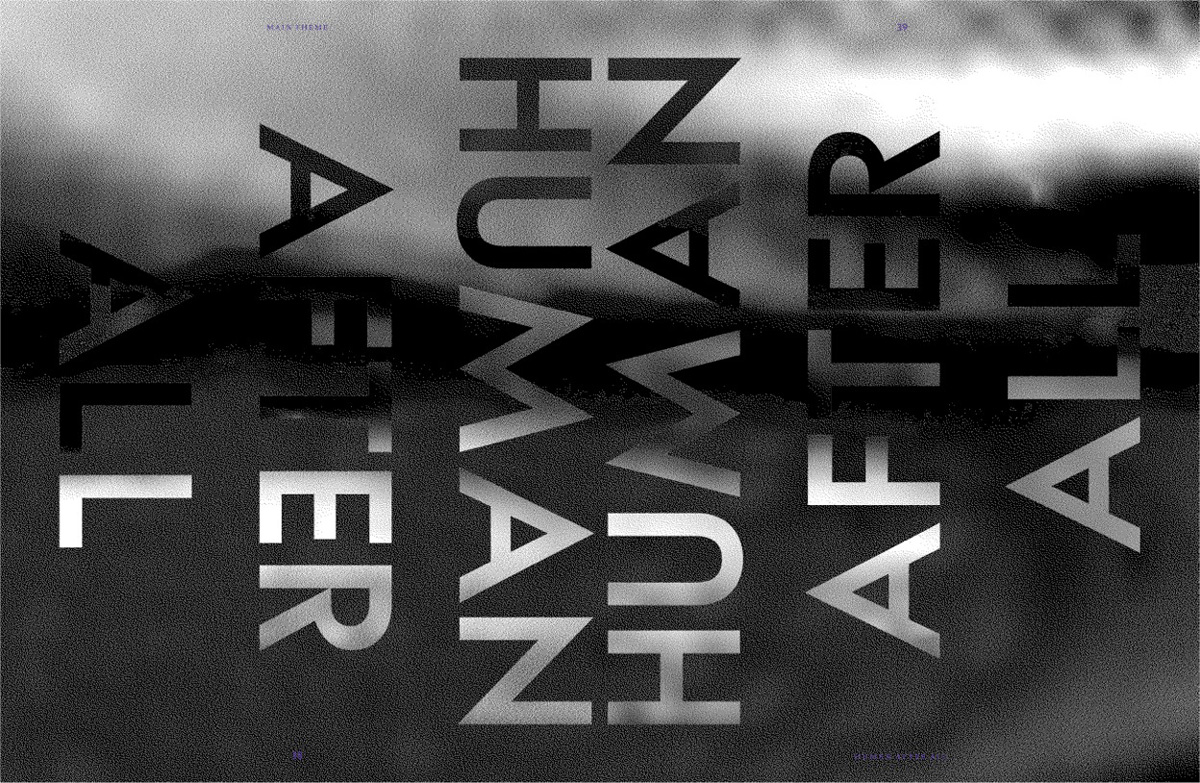
The blend of cybernetics and underground culture realized in the symbolic and mythological repertoire of Cyberpunk continues to inspire sci-fi narratives and permeate the arts, reinforcing its status as a powerful aesthetic. This issue examines the emergence of an art that addresses the processes of mechanization, desexualisation and reification of the human body, and how they relate to questions of identity, morality and fantasy. Featured contributions include Michele D’Aurizio’s overview of the work of a new generation of artists; Karen Archey’s analysis of the work of Canadian artist David Altmejd; a discussion between Brody Condon and Jason Brown coordinated by DIS magazine; and a conversation between young artist Timur Si-Qin and influential philosopher Manuel De Landa.
MONO
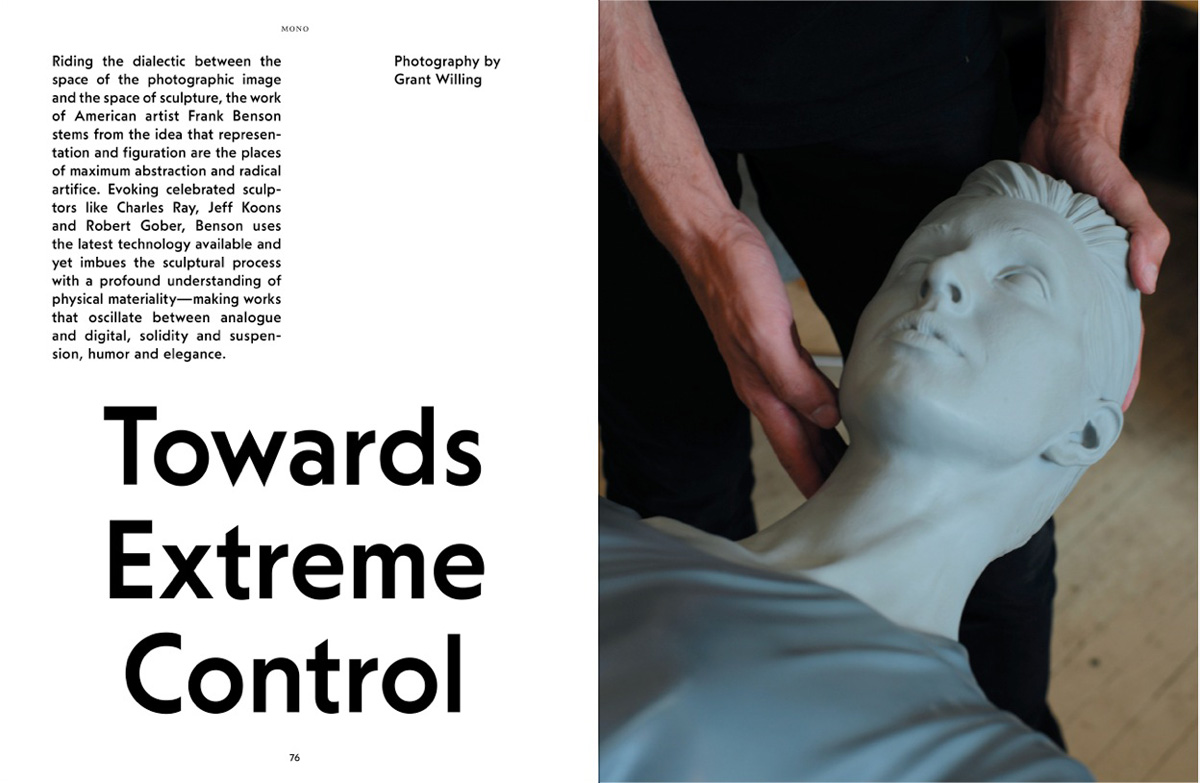
Comprising an essay by Alessandro Rabottini, an interview by Matt Keegan and a photographic portrait by Grant Willing, this issue’s MONO is devoted to American artist Frank Benson, whose work rides the dialectic between the space of the photographic image and the space of sculpture. Evoking celebrated artists like Charles Ray, Jeff Koons and Robert Gober, Benson uses the latest technology available and yet imbues the sculptural process with a profound understanding of physical materiality — making works that oscillate between analogue and digital, solidity and suspension, humor and elegance.
REGULARS
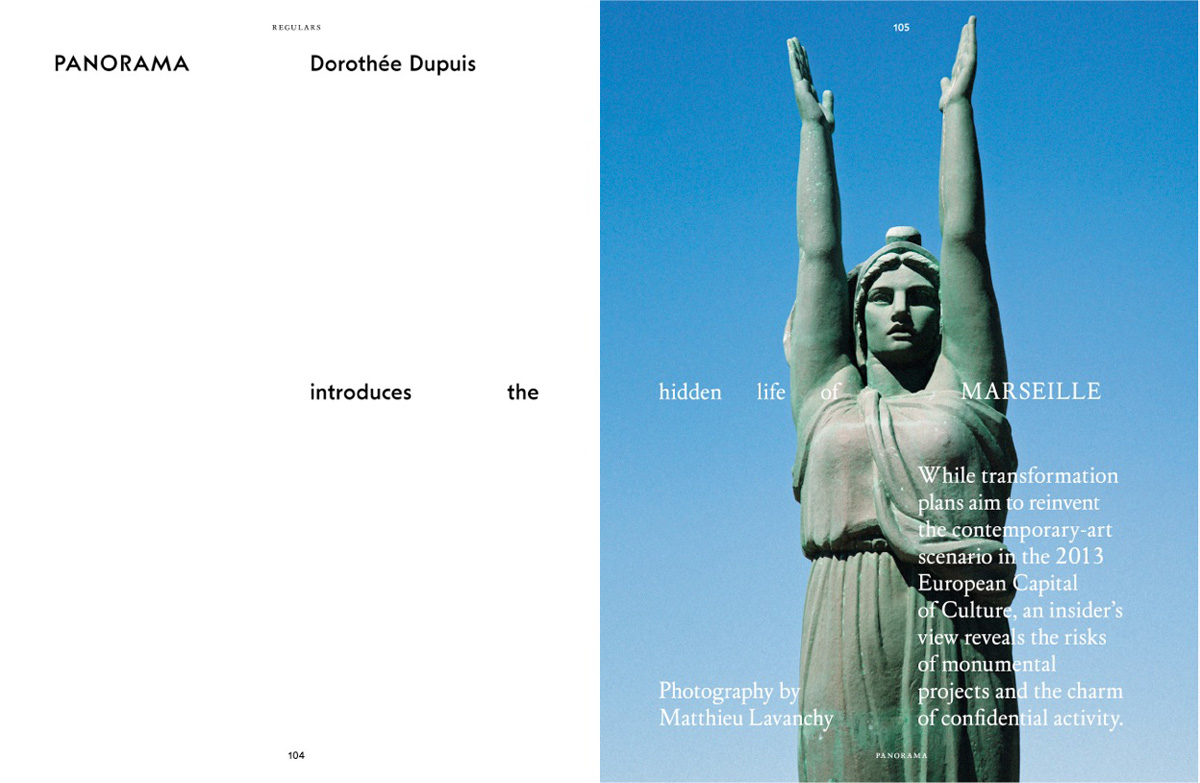
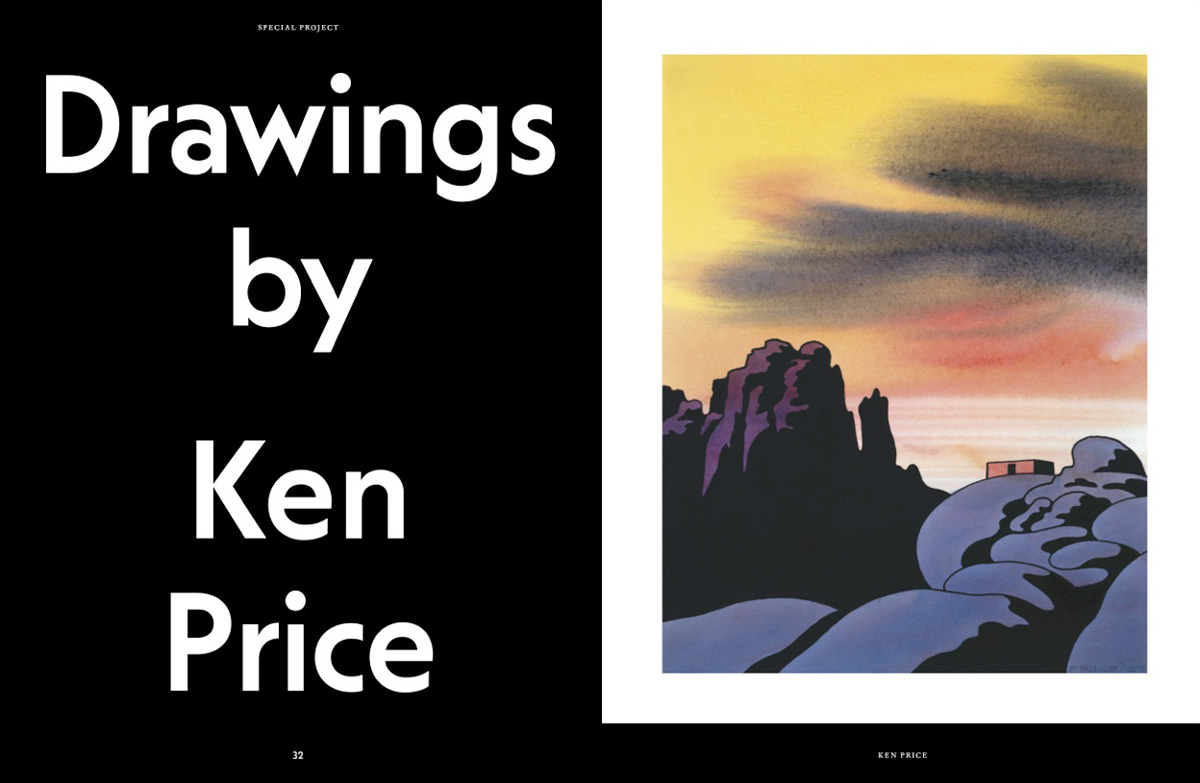
Hans Ulrich Obrist interviews the New York-based provocateur Liz Magic Laser; Dorothée Dupuis introduces the hidden life of Marseille; Luca Cerizza analyzes the emotional topography of Alberto Garutti; and Carson Chan meets the DAAD’s visual arts director Ariane Beyn. The edition is enriched by our seasonal tips on following, reading, listening, stopping by, meeting and visiting; as well as by three special inserts — drawings by Ken Price, stickers by Alistair Frost and images by Alistair Frost.
C Magazine 115
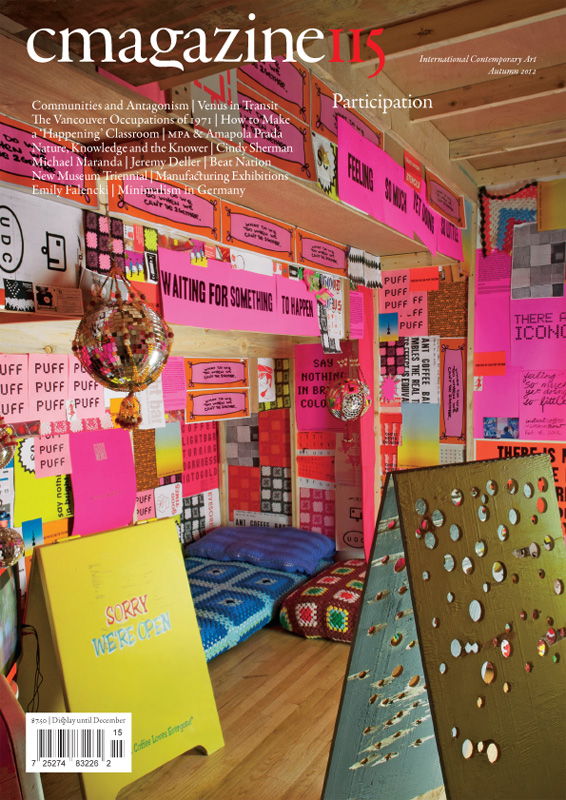
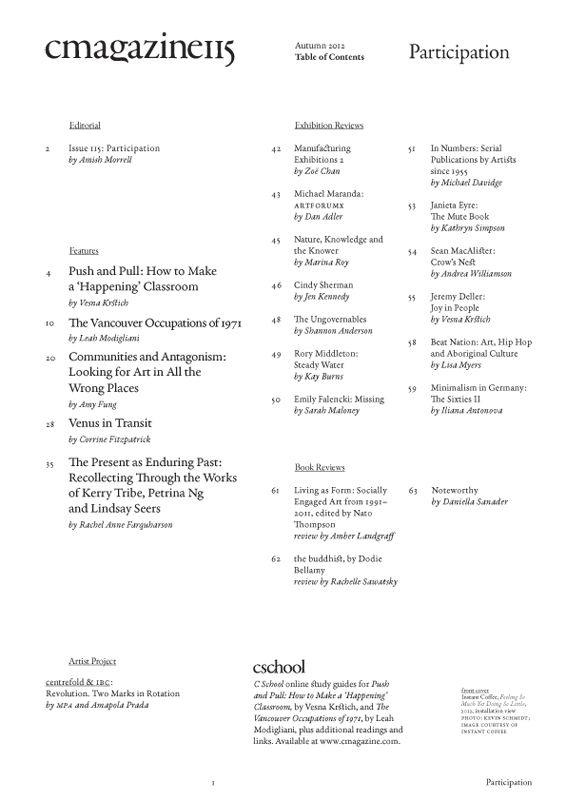
C Magazine 115, Participation
Softcover, 64 pp., offset 4/1, 210 x 295 mm
Edition of 2200
ISSN 1480-5472
Published by C Magazine
$7.50 ·
The Mexican Suitcase

Enrique Santos, The Mexican Suitcase
Softcover with flaps, 360 pp., offset 4/1, 200 x 240 x 32 mm
English and Spanish
Edition of 2000
ISBN 978-607-7636-29-8
Published by Landucci
$45.00 ·
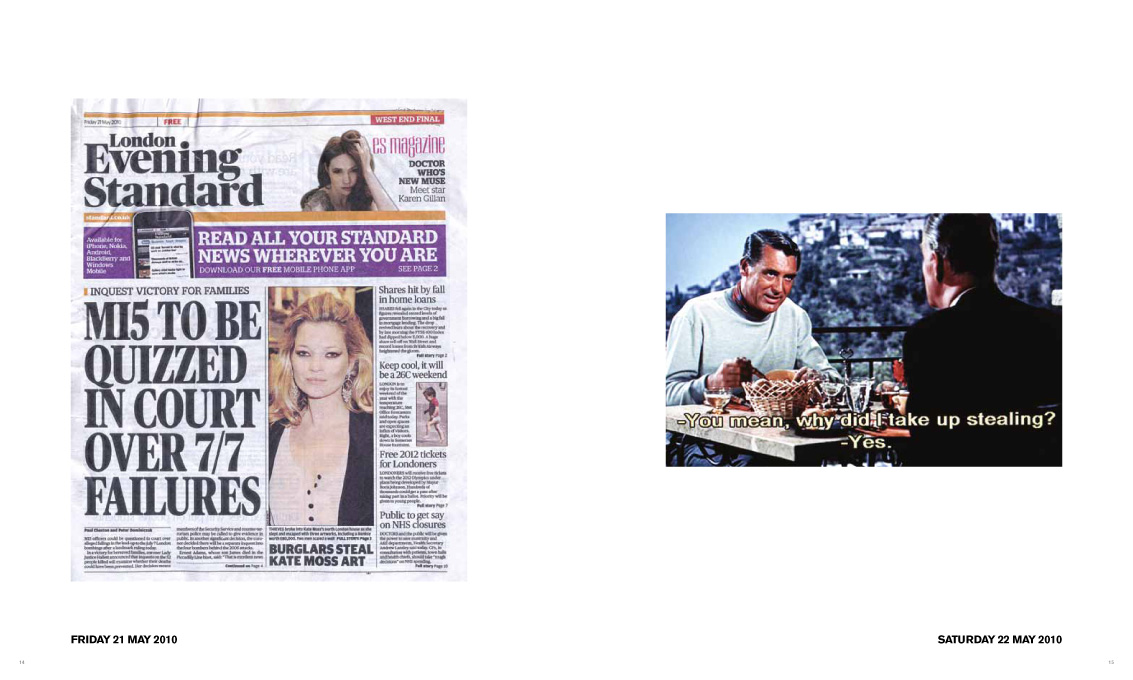
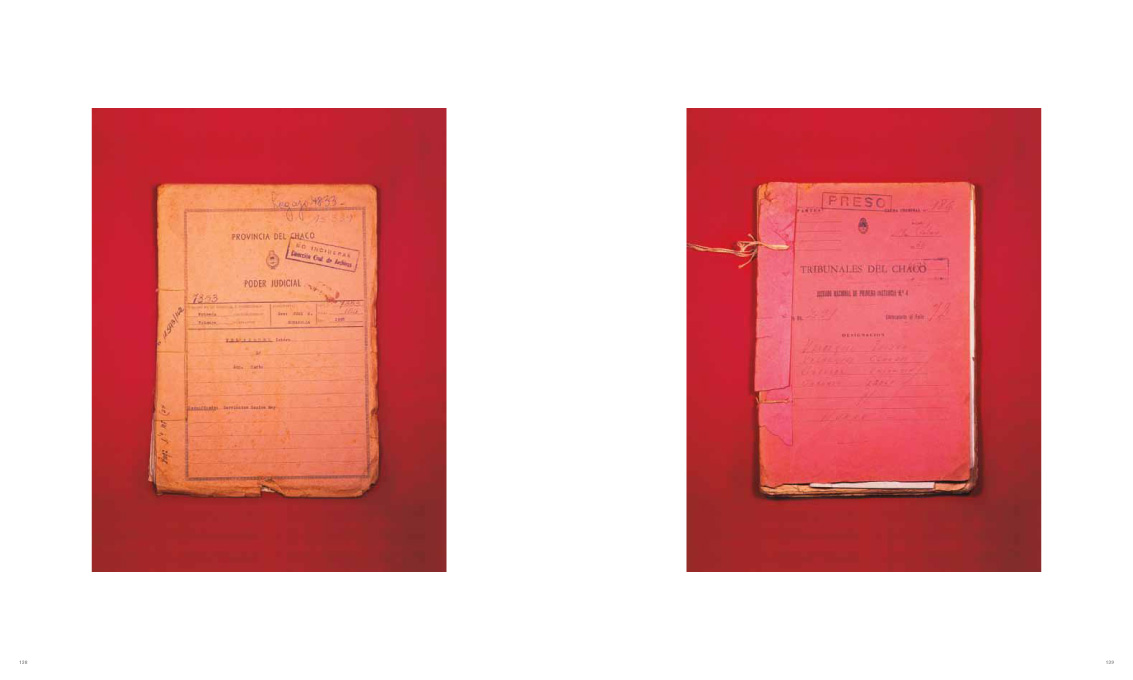
Santos’ work is a way of thinking about how contemporary art is produced, and at the same time it talks about the gaze, the interpretation of he/she who observes, the understanding and production that comes with every look. It reflects upon a single active spectator, who builds a discourse, appropriates all meanings and elaborates on them according to his life story, and his social, cultural and emotional capital. That gaze has a filter through which history is interpreted. It talks about and with the viewer without underestimating his capacity for understanding. From the very beginning, the book presents a relationship of shared complicity, discourse, codes and understandings, but demands a lucid and imaginative perspective.
Retaking film, journalistic, documentary and advertising language, Santos quotes and reinterprets the great thieves of the screen and some real criminals, in order to talk about lies, confusions, myths and misunderstandings, as well as an ever more violent and heartbreaking reality that crawls into our lives through trivialized and shallow images.
— Florencia Magaril