Spiritual Midwifery
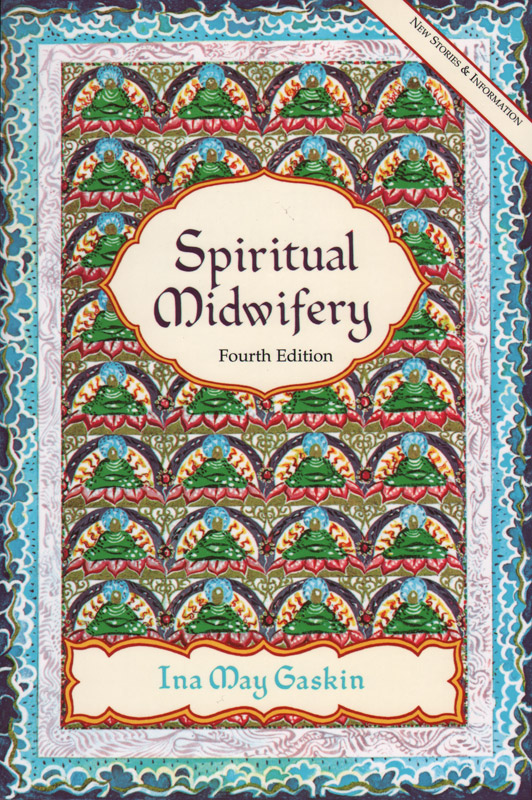
Ina May Gaskin, Spiritual Midwifery
Softcover, 480 pp., offset 4/1, 6 x 9 inches
Fourth edition
ISBN 978-1-57067-104-3
Published by Book Publishing Co.
$13.00 ·
Ina May Gaskin is one of the Founders and the current president of the Midwives’ Alliance of North America. She is a powerful advocate for a woman’s right to give birth without excessive and unnecessary medical intervention.
Her clinical midwifery skills have been developed entirely through independent study and apprenticeship with other midwives around the world. Ina May and fellow Farm midwives were instrumental in the development of the rigorous Certified Professional Midwife (CPM) certification process.
The Farm is an intentional community in Lewis County, Tennessee, near the town of Summertown, Tennessee, based on principles of nonviolence and respect for the Earth. It was founded in 1971 by Stephen Gaskin and 320 San Francisco hippies; The Farm is well known amongst hippies and other members of similar subcultures as well as by many vegetarians. The Farm now has approximately 175 residents.
In the original manifestation of The Farm, all members were believers in God and smoking marijuana was a sacrament, though Farm members did not accept alcohol or other drugs. Also there was no private property, no leather products, no harming of animals and no consumption of meat.
The Farm was established after Gaskin and friends led a caravan of 60 buses, vans, and trucks on a speaking tour across the US. Along the way, they checked out various places that might be suitable for settlement before deciding on Tennessee. After buying 1,064 acres (4.1 km2), the Farm began building its community in the woods alongside the network of crude logging roads that followed its ridgelines. Another adjoining 750 acres (3.0 km2) were purchased shortly thereafter.
From its founding through the 1970s, Farm members took vows of poverty and owned no personal possessions, though this restriction loosened as time passed. During that time, Farm members did not use artificial birth control, alcohol, tobacco, man-made psychotropics, or animal products.
Whole Child / Whole Parent

Polly Berrien Berends, Whole Child / Whole Parent
Softcover, 360 pp., offset 2/1, 6 x 9.25 inches
Revised edition, foreword by M. Scott Peck
ISBN 0-06-091427-0
Published by Perennial Library
$13.00 ·
If you don’t think the title of this book is Whole Parent / Whole Child, then you are the exception. Most people do. Implied is that if the parent is whole, then the child will be whole. If the parent knows how to do it, then the child will turn out okay. But then — oh, horrible thought and worse experience! — if the child seems not to be whole, then the parent must not be whole either.
So we seek diagnoses, explanations for what’s wrong with the child. If we can’t take credit for our children, then at least please excuse us from the blame. I thought it was my fault. I thought he was stupid, lazy. Indeed, recognition of our children’s special differences, limitations, styles of learning, and so forth can be very helpful. But there is another side as well. Secretly we are almost grateful to think that there is something really the matter with him, something only mechanical, something wrong with him rather than with us. So in a strange way, the very thing we started out in favor of (rearing a whole child) turns out to be something we are somehow also against.
This book stands out as one of the first resources to link the teachings of mystics and the world’s religious traditions to the present-day practice of child-rearing. Polly Berrien Berends’s second intention is “to bring to light the far-reaching spiritual significance of even the meanest momentary details of our experience.
For more than two decades, Whole Child / Whole Parent, the first spiritually oriented book on parenthood and the first to address the value of parenthood for the parent as well as for the child, has provided a sound, practical, psychological and spiritual footing for parenthood and family life.
You Are Your Child’s First Teacher
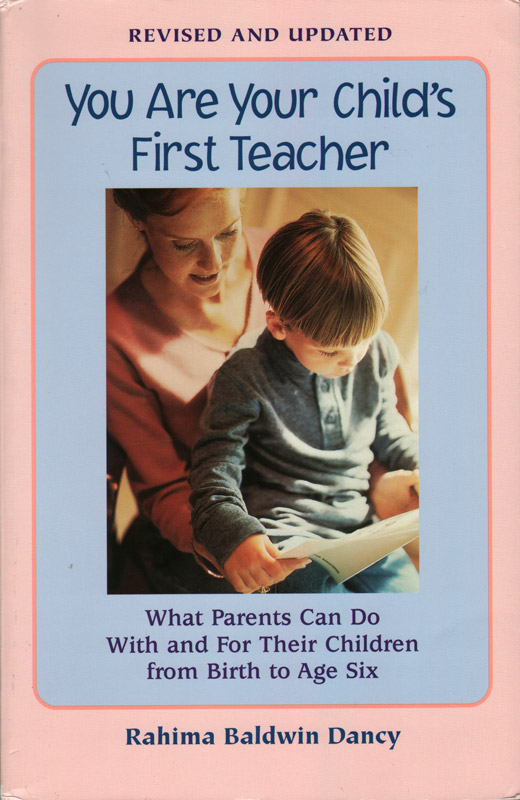
Rahima Baldwin Dancy, You Are Your Child’s First Teacher
Softcover, 384 pp., offset 4/1, 6 x 9.25 inches
Revised edition
ISBN 0-89087-967-2
Published by Celestial Arts
$13.00 ·
You Are Your Child’s First Teacher: What Parents Can Do With and For Their Chlldren from Birth to Age Six.
The importance of what our children learn in the home and through their relationship with us forms the irreplaceable foundation of all that comes later. Mother, childbirth educator, midwife, and Waldorf educator, Baldwin aims to deepen our understanding of the nature of the young child as a whole being — body, mind, emotions, and spirit — so enabling us to meet their needs for balanced development.
In a society which values intellectual development above all else, we tend to ignore other aspects of development. We reason with our children as if they were grown ups and teach them with techniques appropriate for much older children. Distrustful of natural processes, we believe we have to do something in order to ensure our child’s development. Milestones of the first three years — walking, talking, thinking, and memory — occur by themselves, according to their own timetable. Trusting natural processes does not mean that we do nothing, but that the things we do need to be consonant with the child’s own developmental stages.
The world of the young is critically endangered, as more and more children are placed in daycare in infancy, and academic pursuits are pushed onto younger and younger children. The hurried child syndrome is apparent in all spheres of activity. We try to speed their development with baby walkers and gymnastics, and reason with five-year-olds as if their ease with words ought to translate into control of their actions in the future. Problems arise when we fail to realize how different a three year old is from a child of nine, or a teen from an adult. Children do not think, reason, feel, or experience the world the way an adult does.
She advocates nurturing babies’ development through the first year by touching, carrying, talking, singing, contact with nature, nursery rhymes, and movement games. She cautions against baby bouncers, baby walkers, playpens, and baby gymnastics, and believes that one of the greatest gifts parents can give a child between birth and first grade is time and materials for the creative play which helps her work her way into earthly life by imitating all she experiences. The very young do not need playgroups (though their parents might!), gymnastics, educational tools, nor fancy toys. They need circle and movement games, songs, musical and artistic activities, and examples of real work for imitation. They need contact with nature, nourishing images from stories, and simple toys they can complete with the imagination. We learn, for example, that the beautiful doll and the anatomically correct doll are a hindrance to the child’s inner development, leaving nothing for her imagination to supply, and providing more than she can hold in awareness. Toys based on TV and movie characters (therefore with fixed personalities) leave little room for creative imagination. Baldwin urges that we consider not only the safety, but aesthetic quality of a toy. Is it beautiful? How does it feel to the touch? What pictures of the world does it offer the child?
She cautions us against providing rational and scientific answers before our children are ready. Because their verbal skills far outweigh their conceptual knowledge, we tend to answer at a level of abstraction far beyond their comprehension. Calling directly on the intellect and memory of the child during the first seven years, not only takes him away from movement and valuable play, but accelerates his change of consciousness and robs him of valuable years of early childhood — years vital to later physical health and mental development. At this age, children learn best through direct life experiences and imitation.
The young child accepts us as perfect and good; once he becomes older and sees our imperfections — the most important thing is that the child sees we are striving to do better. Our desire for inner growth (or our complacency) is perceived by the child and has a very deep impact.
Interviews Volume I

Hans Ulrich Obrist, Interviews Volume I
Softcover, 968 pp., offset 1/1, 140 x 205 mm
Edition of 2000
ISBN 9788881584314
Published by Charta
$59.00 ·
Bicycles

Michael Kim, Bicycles
Softcover, 48 pp., offset 1/1, 4 x 5.75 inches
Edition of 500
Published by Tramnesia
$8.00 ·
Bicycles is a collection of newspaper clippings where bicycles appear incidentally to the photograph subject.
Three Acts

John Divola, Three Acts
Hardcover, 144 pp., offset 4/duotone, 11 x 9.25 inches
Edition of 2000
ISBN 9781931788953
Published by Aperture
$50.00 ·
The Coming Insurrection

The Invisible Committee, The Coming Insurrection
Softcover, 136 pp., offset 1/1, 4.5 x 7 inches
Edition of 2000
ISBN 978-1-58435-080-4
Published by Semiotext(e)
$13.00 ·
—from The Coming Insurrection
The Coming Insurrection is an eloquent call to arms arising from the recent waves of social contestation in France and Europe. Written by the anonymous Invisible Committee in the vein of Guy Debord — and with comparable elegance — it has been proclaimed a manual for terrorism by the French government (who recently arrested its alleged authors). One of its members more adequately described the group as “the name given to a collective voice bent on denouncing contemporary cynicism and reality.” The Coming Insurrection is a strategic prescription for an emergent war-machine to “spread anarchy and live communism.”
Written in the wake of the riots that erupted throughout the Paris suburbs in the fall of 2005 and presaging more recent riots and general strikes in France and Greece, The Coming Insurrection articulates a rejection of the official Left and its reformist agenda, aligning itself instead with the younger, wilder forms of resistance that have emerged in Europe around recent struggles against immigration control and the “war on terror.”
Hot-wired to the movement of ‘77 in Italy, its preferred historical reference point, The Coming Insurrection formulates an ethics that takes as its starting point theft, sabotage, the refusal to work, and the elaboration of collective, self-organized forms-of-life. It is a philosophical statement that addresses the growing number of those — in France, in the United States, and elsewhere — who refuse the idea that theory, politics, and life are separate realms.
Reviews
“…without a doubt the most thought-provoking radical text to be published in the past ten years. It deserves to be read and discussed.”
—Daniel Miller, New Statesman
“Any book indirectly responsible for massive raids involving helicopters and anti-terrorist police, a splenetic Fox News broadcast and an impromptu book-reading at a Barnes & Noble bookshop in New York (also attended by the police) must have something going for it. And so it is with The Coming Insurrection, the kind of political pamphlet last fashionable in the 17th century (and perhaps for a period in the 1960s and ‘70s).”
—Nina Power, Frieze Magazine
“I am not calling for a ban on this book. It’s important that you read this book. [...] And let me tell you something: Don’t dismiss these people. Don’t dismiss them.”
—Glenn Beck, Fox News/Glenn Beck Program
The Conversation Series 15
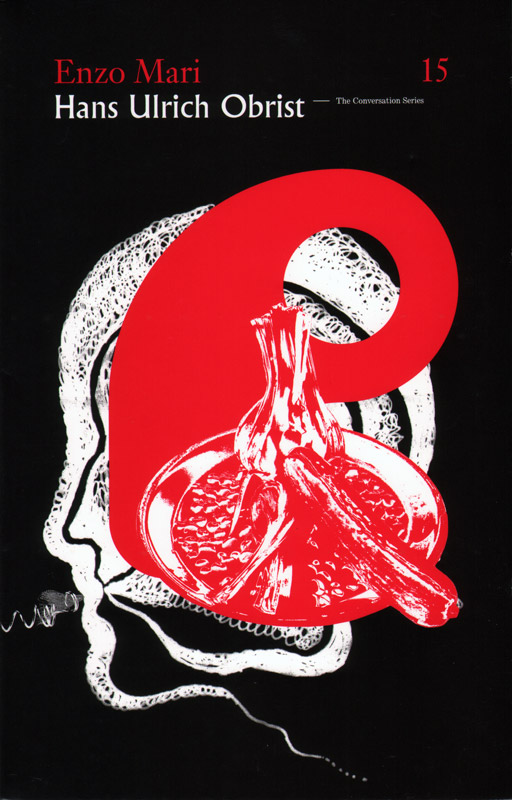
Hans Ulrich Obrist and Enzo Mari, The Conversation Series 15
Softcover, 88 pp., offset 4/1, 135 x 210 mm
Edition of 5000
ISBN 9783865604019
Published by Walther König
$25.00 ·
Enzo Mari was born in 1932 in Novara, Italy. He has most recently completed a series of tubular aluminum chairs for Vienna’s Gebrüder Thonet and a collection for the Japanese home store Muji.
Negative Space

Mungo Thomson, Negative Space
Softcover, 160 pp., offset 4/4, 175 x 255 mm
Edition of 5000
ISBN 978-3-905770-27-8
Published by JRP|Ringier, CK editions
$29.00 ·
This publication is part of the series of artists projects edited by Christoph Keller. Personally selected by Keller, for Textfield, as one of his top five from the series.
Celebration at Persepolis
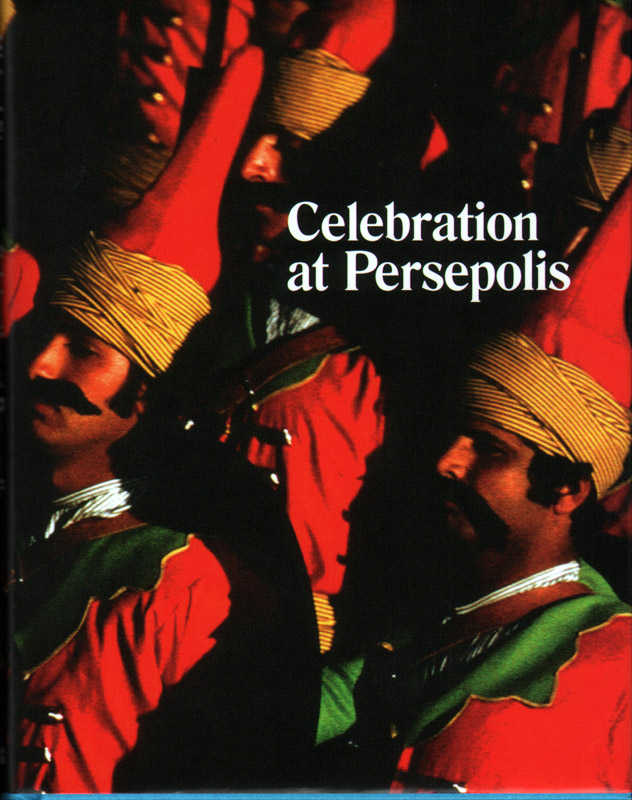
Michael Stevenson, Celebration at Persepolis
Hardcover, 64 pp., offset 4/1, 125 x 160 mm
Edition of 5000
ISBN 978-3-905829-48-8
Published by JRP|Ringier/Arnolfini
$19.00 ·
Stevenson revisits the site of an infamous week-long party held in 1971 by the Shah of Iran among the ruins of the ancient Persian city of Persepolis. Reconstructing part of the temporary architecture built for the celebrations (itself now a ruin), Stevenson looks at this pivotal moment in Iranian history which led toward the subsequent cultural revolution.
This publication is part of the series of artists projects edited by Christoph Keller. Personally selected by Keller, for Textfield, as one of his top five from the series.
Zeitung

Peter Piller, Zeitung
Hardcover, 384 pp., offset 4/1, 280 x 280 mm
Edition of 5000
ISBN 978-3-905829-10-5
Published by JRP|Ringier, CK editions
$95.00 ·
This publication is the most complete compilation to date of Peter Piller’s collection of found images. More than 2000 illustrations chosen from newspapers are organized in such categories as “Touching Cars,” “Sad, Hopeless, Despair, Tristesse,” “Girls Firing Arms,” “Stand-in, Protests,” or “Man and Fire.” An improbable typology of press photography of the last decades.
This publication is part of the series of artists projects edited by Christoph Keller. Personally selected by Keller, for Textfield, as one of his top five from the series.
Cloud, the, 3
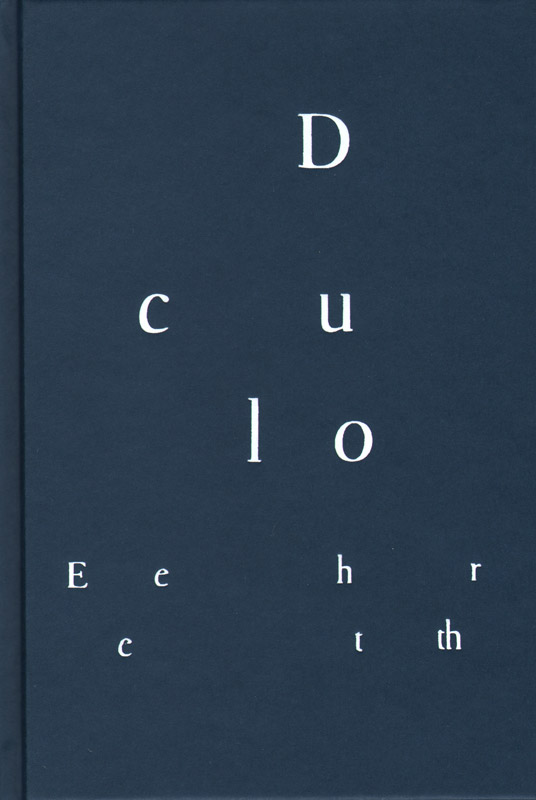
Helen Mirra, Cloud, the, 3
Hardcover, 304 pp., offset 4/1, 140 x 195 mm
Edition of 5000
ISBN 978-3-905770-17-9
Published by JRP|Ringier, CK editions
$45.00 ·
This publication is part of the series of artists projects edited by Christoph Keller. Personally selected by Keller, for Textfield, as one of his top five from the series.
Appendix Appendix

Stuart Bailey and Ryan Gander, Appendix Appendix
Softcover, 192 pp., offset 4/1, 215 x 280 mm
Edition of 5000
ISBN 978-3-905770-19-3
Published by JRP|Ringier, CK editions
$29.00 ·
documentation, nor an “artist’s book,” it pushes for a third way, editing and presenting each individual piece of work in a manner appropriate to its specific nature. In the years since “Appendix,” Gander’s work has increasingly encompassed sound and the moving image in addition to the earlier objects and installations. This shift will directly affect the form of Appendix Appendix.
Born in 1976, Ryan Gander lives and works in London and Amsterdam. His photographs, films, installations and sculptures draw on multiple layers of facts and fiction. He has exhibited in the USA and throughout England and Europe.
The English-born Stuart Bailey (*1973) has forged a formidible creative base for himself in Amsterdam where he has benefited greatly from Dutch design tradition. Since his arrival in the Netherlands, he has become a steady contributor to the art and design culture as a writer, critic, editor, and graphic designer.
This publication is part of the series of artists projects edited by Christoph Keller. Personally selected by Keller, for Textfield, as one of his top five from the series.
Weeping

Michael Kim, Weeping
Softcover, 48 pp., risograph 2/1, 4 x 5.75 inches
Edition of 300
Published by Tramnesia
$7.00 ·
Weeping is a collection of newspaper clippings from the New York Times and the Wall Street Journal of people crying.