Llano Community Bookstore
CalArts Library and IKO IKO Space
Two-part temporary bookstore
April 5 — April 20, 2012
Organized by Textfield, Inc.
PART I
CalArts Library: Microfilm Room
24700 McBean Pkwy.
Valencia, CA 91355
Thursday, April 5, 1-6pm
PART II
IKO IKO Space
931 N. Fairfax Ave.
Los Angeles, CA 90046
Friday, April 6 — Friday, April 20, 12-7pm (Closed Mondays)
Llano Community Bookstore is a two-part temporary bookstore, hosted for one day (Thursday, April 5, 1-6pm) at the
CalArts Library, and for fifteen days (Friday, April 6 to Friday, April 20) at
IKO IKO in Los Angeles.
CalArts graduate students have selected titles from the Textfield Distribution Catalog, to be included in both parts, and will install/deinstall and work as Shopkeepers during PART I of the temporary bookstore, located in the CalArts Library Microfilm Room. PART II of the temporary bookstore will be hosted by IKO IKO in Los Angeles, and includes furniture, used for both parts, designed by WAKA WAKA.
The (fictional) bookstore is based upon, and takes its name from, Llano Del Rio, which was organized under the Llano Del Rio Company and was a corporate-run socialist Utopian society initiated by Job Harriman, following his narrow defeat in a runoff election for the mayorship of Los Angeles. Harriman believed that the success of socialism depended not only on politics, but also on the realization of socialist principles. Harriman did not attempt to reform all of society, but rather, he believed that by creating a functioning socialist community within the larger society of capitalism, the larger society would gradually convert to socialism.
100% Biz, Abraaj Capital Art Prize, Adam Michaels, Bücher & Hefte, CalArts, CCC, Cheap Art America, City of Quartz, Distribution, Ein Magazin über Orte, Fillip, FormContent, Glen Cummings, IKO IKO, Job Harriman, Jonathan Maghen, KALEIDOSCOPE Press, Kristin Dickson, Kunst Halle Sankt Gallen, Kunstverein, Llano Community Bookstore, Llano Del Rio, Manuel Raeder, Mark Owens, mediabus, Midway Contemporary Art, Mike Davis, Nieves, Occasional Papers, Peres Projects, Schnauzer, Shin Okuda, Slavs and Tatars, The Kingsboro Press, WAKA WAKA
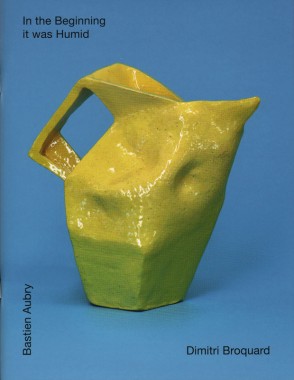
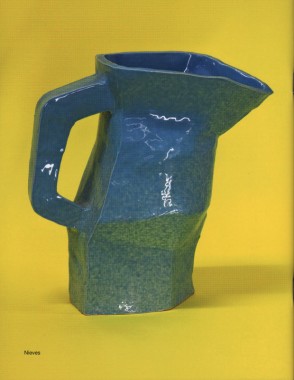
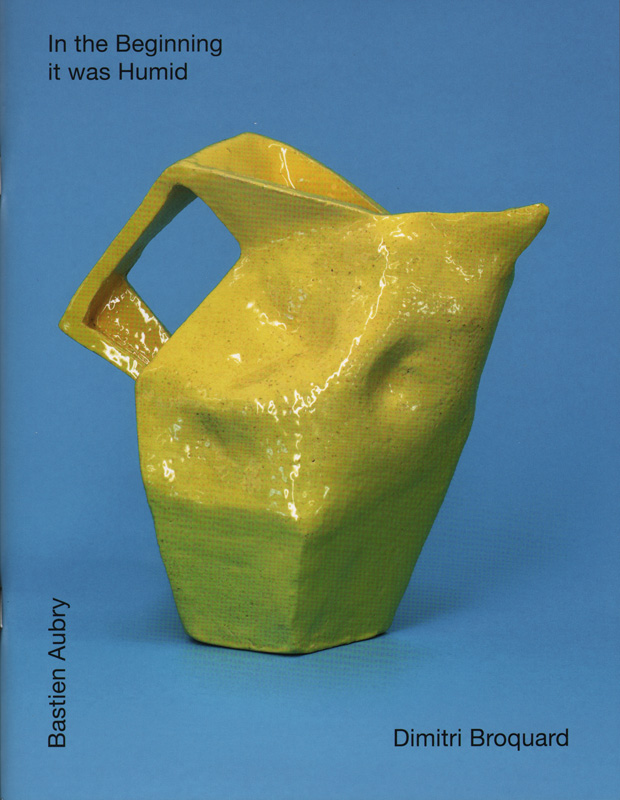
Bastien Aubry and Dimitri Broquard, In the Beginning it was Humid
Softcover, 48 pp., offset 4/4, 195 x 255 mm
Edition of 1000
ISBN 978-3-905999-03-7
Published by Nieves
$20.00 · out of stock
For several year, Bastien Aubry and Dimitri Broquard have been making work inspired by outsider art or the applied arts like handcrafts or ceramics. It appears as if they both don’t think much of rules and that they just spontaneously adapt their ideas. That makes their work fresh and full of expression.
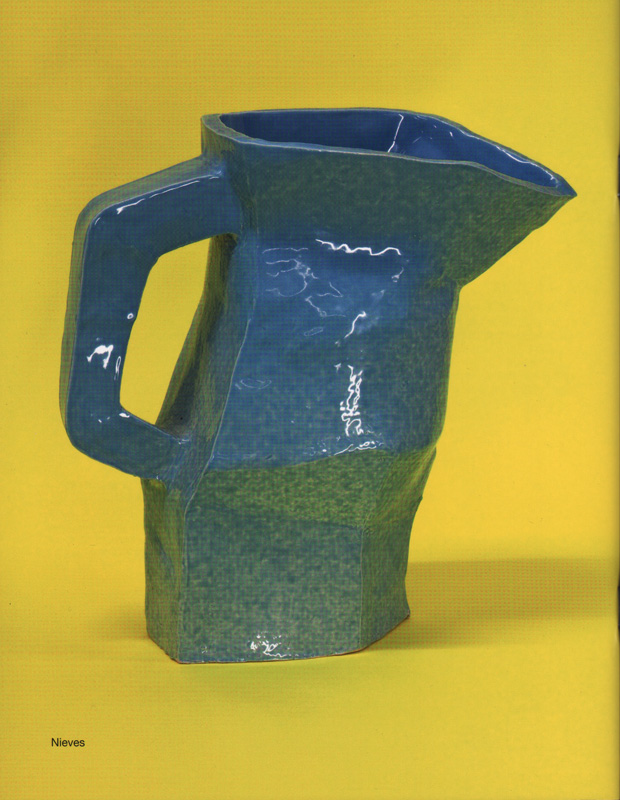
In the Beginning it was Humid — their fourth publication with Nieves — features a broad selection of their ceramic works from the last few year, and concludes with a short story by A.C. Kupper.
Bastien Aubry (1974) and Dimitri Broquard (1969) established the two-man design studio Flag in 2002. They work for art and cultural institutions, producing catalogues, artists books, magazines and posters. FLAG also creates drawings, illustrations for editorials and private projects. Both Broquard and Aubry respectively teach at art schools in Switzerland.
A.C. Kupper, and Dimitri Broquard, Art, Bastien Aubry, Ceramics, Design, Distribution, Flag, Nieves
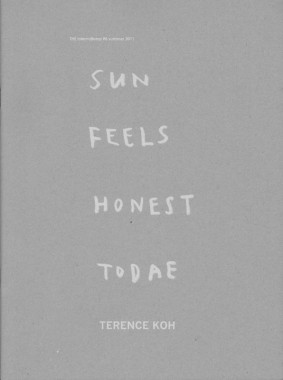
Terence Koh, Sun Feels Honest Todae
Softcover, 40 pp., offset 1/1, 225 x 305 mm
Edition of 1000
ISBN 978-3-905714-96-8
Published by Nieves
$24.00 ·
Issue #8 of THE international with Terence Koh features deep monochrome prints of his haunting photography layered with drawings that form collages evoking avant-garde Japanese underground scenes from the 1970s.
Art, Distribution, Nieves, Photography, Terence Koh, THE International
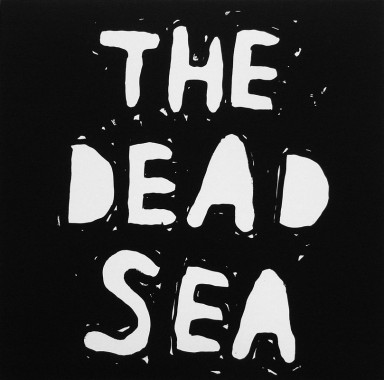
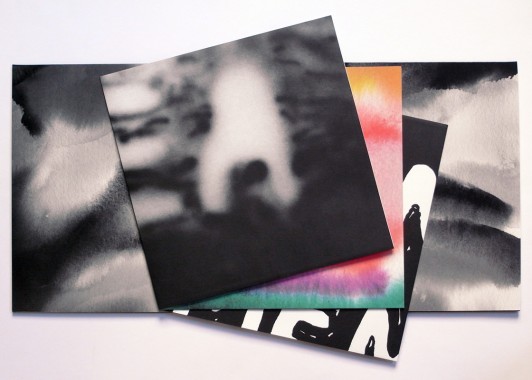
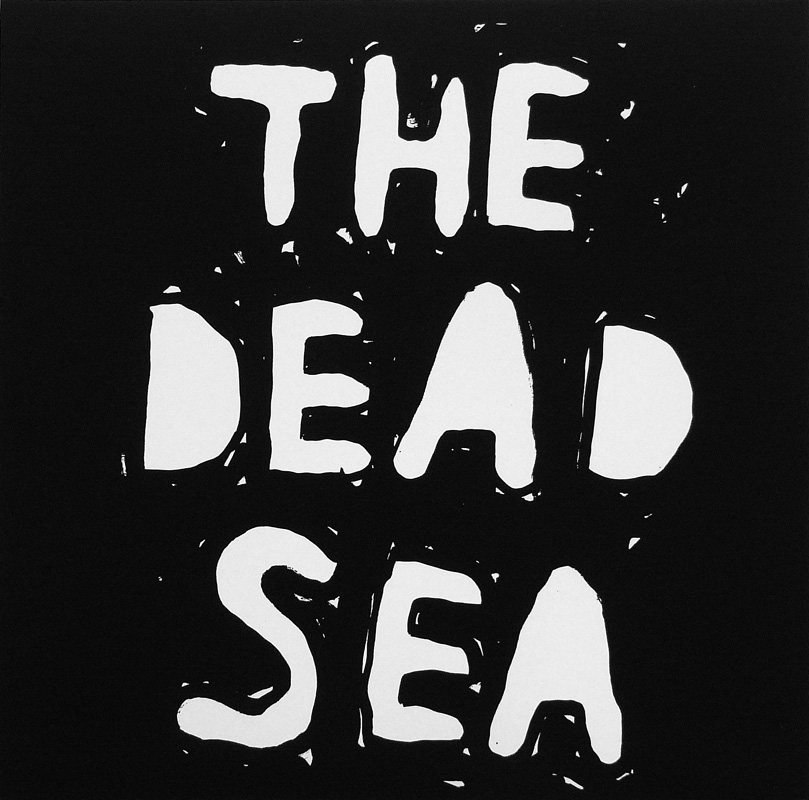
Stefan Marx, The Dead Sea
Hardboard/gatefold record sleeve, 3 posters, offset 1/1, 600 x 900 mm
Edition of 1000
ISBN 978-3-905999-01-3
Published by Nieves
$18.00 ·
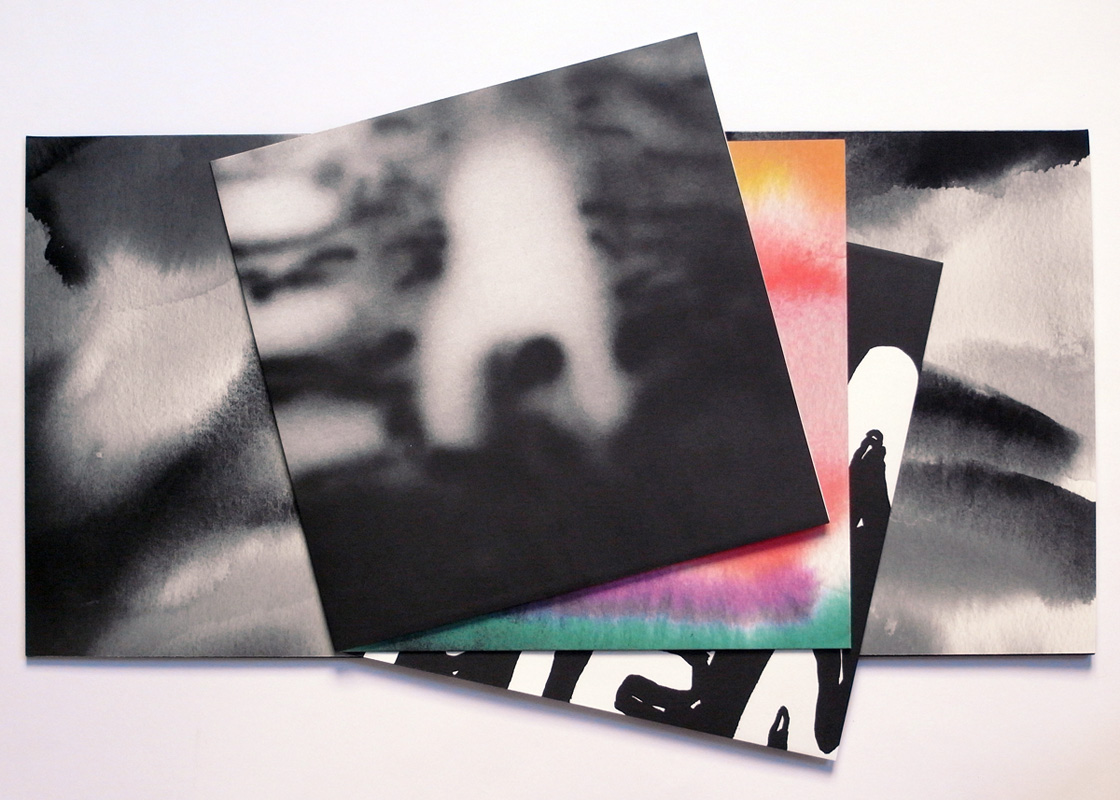
With his debut release on co-owned Smallville record label Stefan Marx presents an exclusive three-part poster collection coated inside a gatefold 12-inch cover sleeve. Giving the Smallville shop and label a visual face since the very beginning Stefan Marx created hundreds of posters and flyers, painted the shop windows regularly and conceived every record cover.
Now is the time for himself to release an extraordinary Smallville/Nieves issue in 12-inch format. Three folded posters (each has the size of 90 x 60 cm) including a first appearance of his Band project The Dead Sea (aka Stefan Marx, RVDS, Lawrence and Birte Löschenkohl).
Birte Löschenkohl, Distribution, Lawrence Löschenkohl, Nieves, Smallville, Stefan Marx
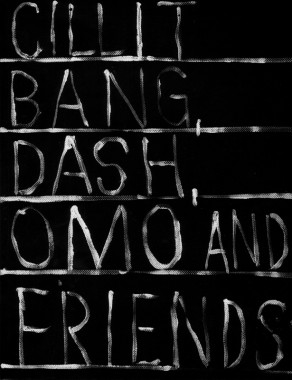
Beni Bischof, Cillit Bang, Dash, Omo and Friends
Softcover, 112 pp., offset 1/1, 195 x 255 mm
Edition of 1000
ISBN 978-3-905714-97-5
Published by Nieves
$28.00 ·
Beni Boschof draws wild and intuitive on everything within reach of his hands. In this manner he compiled several thick books, all unique, each page an original. Mysterious structures, cross-eyed figures and words, that somehow sound strangly familiar… Cillit Bang, Dash, Omo and Friends combines a selection from the original books into a singular new publication.
Art, Beni Bischof, Distribution, Illustration, Nieves
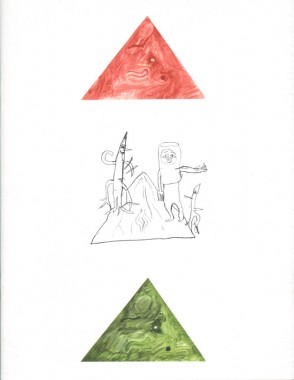
Gil Pellaton, On Vient Quand Même!
Softcover, 20 pp., offset 4/4, 195 x 255 mm
Edition of 1000
ISBN 978-3-905714-99-9
Published by Nieves
$16.00 ·
Table bombs, ice cream and balls of lights in nebulous doom and gloom: Artist Gil Pellaton places his grotesquely twisted figures in imaginary scenes that hover between scenery-like reality and bizarre exaggeration. The large-scale oil paintings are dynamic and as specific as dreamlike worlds can be. On Vient Quand Meme! is his inaugural publication, combining his most recent works in a small but mighty volume.
Distribution, Gil Pellaton, Grand Palais, Illustration, Journal Gallery, Nieves
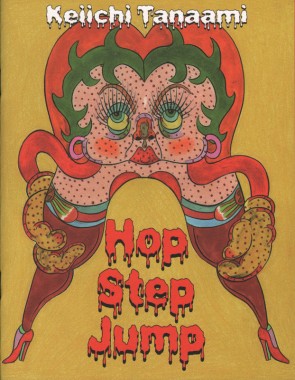
Keiichi Tanaami, Hop Step Jump
Softcover, 32 pp., offset 4/4, 195 x 255 mm
Edition of 1000
ISBN 978-3-905999-02-0
Published by Nieves
$18.00 ·
Hop Step Jump brings together portraits of colorful, eccentric figures that interpret “Life and Hereafter”, essential truth and source of inspiration to Keiichi Tanaami. Tanaami’s vivid and highly surreal drawings are often considered psychedelic. However, a closer look reveals that his drawings go far beyond psychedelic trops. They have their roots in his tense personal recollections: memories, dreams and nightmares.
Carte Blanche, Culture, Distribution, Illustration, Keiichi Tanaami, Nieves
Phil Chang
Arthur Ou
Eduardo Sarabia
Anna Sew Hoy
Temporary bookshop and exhibition
July 21 — August 25, 2011
Reception: Thursday, July 21, 6-8pm
Organized by Textfield, Inc.
Creatures of Comfort New York is pleased to present
No More Reality, a temporary bookshop and exhibition organized by Textfield, Inc. The bookshop and exhibition will take place in Creatures of Comfort’s adjacent project space at
205 Mulberry St.
In conjunction with the bookshop, which will feature current and archived titles from Textfield Distribution, there will be an exhibition of work by artists that Jonathan Maghen has collaborated with through Textfield to realize various publishing projects. The exhibition will feature the works of Phil Chang, Arthur Ou, Eduardo Sarabia, and Anna Sew Hoy.
The bookshop and exhibition title have been appropriated from the Philippe Parreno work, No More Reality (the demonstration), 1991, which is a four-minute video of children demonstrating, and chanting the slogan and title (“No More Reality”).
New York Times Tmagazine.
Aki Books, Amir Zaki, Anna Sew Hoy, ART2102, Arthur Ou, Ava Kaufman, Boabooks, C Magazine, Carvalho Bernau, Charlie White, Cheap Art America, Christoph Keller, Condiment, Cornerkiosk Press, Creatures of Comfort, der:die:das:, Distribution, Eduardo Sarabia, Ein Magazin über Orte, Exhibitions, Fellows of Contemporary Art, Fillip, FOCA, FormContent, Four Over One, IFS Ltd., Jade Lai, Jonathan Maghen, Karl Haendel, Keith Bormuth, Kunstverein, LACMA, Laura Bartlett Gallery, Laura Palmer Foundation, Manuel Raeder, Midway Contemporary Art, Mono.Kultur, New York, Nieves, Occasional Papers, OK-RM, Oslo Editions, Paper Monument, Participant Inc, Passenger Books, Phil Chang, Philippe Parreno, Project Projects, Rainoff Books, Regency Arts Press, Schnauzer, Shane Campbell Gallery, Slavs and Tatars, Teknisk Industri AS, Textfield, The Kingsboro Press, Tramnesia, VCFA, Vermont College of Fine Arts, Vier5
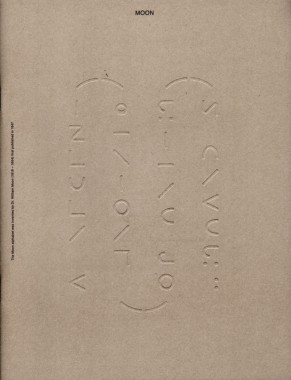
Jürg Lehni and Alex Rich, Research Notes
Softcover, 20 pp., offset 1/1, 195 x 255 mm
Edition of 500
ISBN 978-3-905714-95-1
Published by Nieves
$14.00 ·
In an attempt to celebrate how we find ourselves doodling while on the phone, testing pens in stationery shops, our belief in folklore, the need to misuse technology or whose idea it was to fly aero planes in formation to write messages across our skies.
The research notes selected from the archive A Recent History of Writing & Drawing hopefully provide references to things old, new and maybe forgotten which together can offer an alternative understanding of our habit to document thoughts and ideas. Upending assumptions that any one kind of communication is more authentic, more direct or more valid that any other, A Recent History of Writing & Drawing finds meaning, texture and poetry in the most unlikely places.
Alex Rich, Art, Culture, Design, Distribution, Drawing, Jürg Lehni, Nieves, Science, Typography
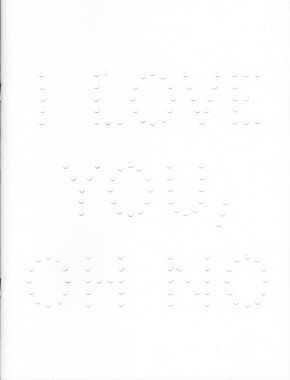
Jürg Lehni and Alex Rich, Empty Words
Softcover, 24 pp., cut paper, 195 x 255 mm
Edition of 500
ISBN 978-3-905714-93-7
Published by Nieves
$24.00 ·
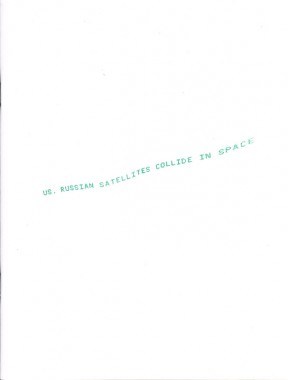
Jürg Lehni and Alex Rich, News
Softcover, 24 pp., offset 1/1, 195 x 255 mm
Edition of 500
ISBN 978-3-905714-94-4
Published by Nieves
$14.00 ·
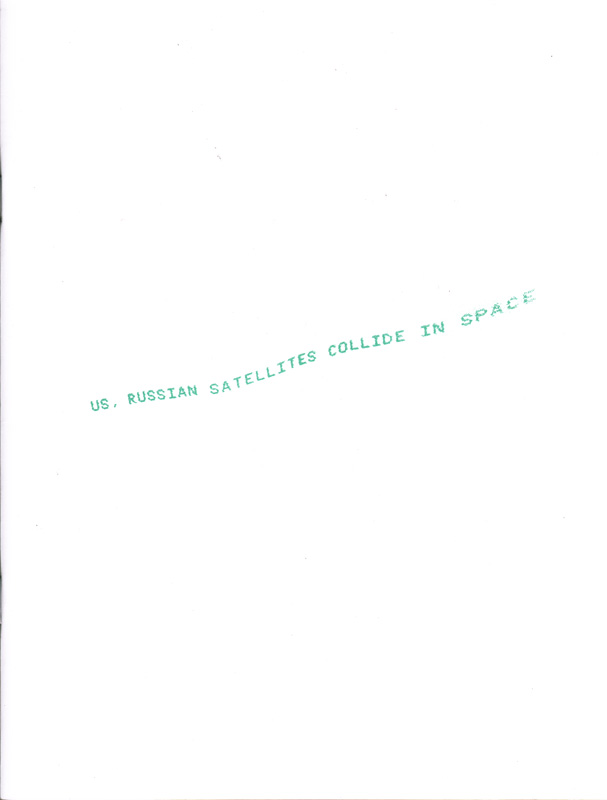
The
Speed-i-Jet, a mobile pen-printer manufactured by
Reiner (Germany), is a device built around an industrial inkjet cartridge / printing head. With its clumsy user interface and 30 character maximum capacity, this charming parasitical product prompted the discussion of possible uses for such a device. Together with the curatorial staff of the institution, daily news headlines were selected and transferred onto the devices. Holding and moving the device like a pen, visitors could experience the writing of texts to which the author is ambiguous.
The headlines were collected during Things to Say at Kunst Halle Sankt Gallen, Switzerland, 14 February — 12 April, 2009.
Alex Rich, Art, Design, Distribution, Jürg Lehni, Kunst Halle Sankt Gallen, Nieves, Typography

Ari Marcopoulos, Directory
Softcover, 1200 pp. + signed print, offset 1/1, 215 x 275 x 70 mm
First edition
ISBN 978-0-8478-3532-4
Published by Nieves
out of print
Ari Marcopoulos’s unique style of raw immediacy has made him one of the most important contemporary photographers. For thirty years, photographer Ari Marcopoulos has been pioneering contemporary photography by documenting subcultures such as skateboarders and graffiti artists, as well as landscapes and his own family and friends. Since his days printing photographs for Andy Warhol, he has amassed a huge body of work marked by its arresting and unsentimental intimacy that has been influential to the worlds of art, fashion, and photography. Bound to mimic a phone book, Ari Marcopoulos, Directory presents a collection of approximately 1,200 photographs, with curator and critic Neville Wakefield providing insightful commentary on some of Marcopoulos’s singular images. Copublished with Rizzoli, each book in this limited-edition series includes a print signed by the artist.
Ari Marco, Culture, Dung Ngo, Graffiti, Julie Schumacher, Neville Wakefield, Nieves, Photography, Rizzoli
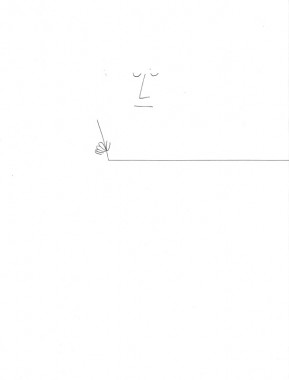
Saul Steinberg, The Line
Leporello Foldout, 30 pp., offset 1/1, 195 x 255 mm [5850 x 255 mm unfolded]
Edition of 1000
ISBN 978-3-905714-80-7
Published by Nieves
$24.00 · out of stock
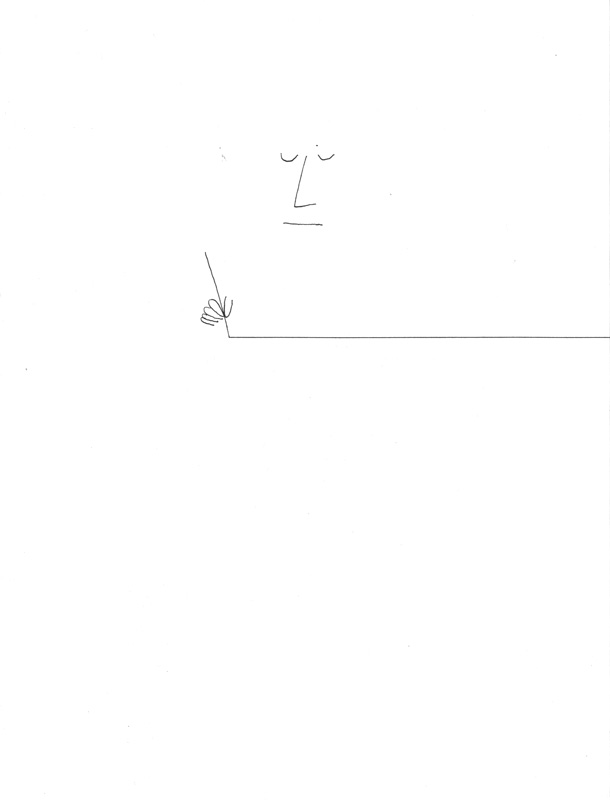
The hallmark of Saul Steinberg’s art is the inked line, always drawn with a spare elegance that expresses the semiotic richness of the line itself. As it shifts meaning from one passage to the next, Steinberg’s line comments on its own transformative nature.
The Line, the original a 10-meter-long drawing with 29 panels that unfold, accordion fashion, is Steinberg’s manifesto about the conceptual possibilities of the line and the artist who gives them life. His drawing hand begins and ends the sequence, as the simple horizontal line that hand creates metamorphoses into, among other things, a water line, laundry line, railroad track, sidewalk, arithmetic division line, or table edge; near the end, the curlicues etched by the iceskater’s blade remind us of the role calligraphy plays in Steinberg’s art.
The Line was designed for the Children’s Labyrinth, a spiraling, trefoil wall structure at 10th Triennial of Milan, a design and architecture fair that opened in August 1954. The drawing, photographically enlarged and incised into the wall, was one of four Steinberg conceptions used on the labyrinth.
Art, Artists Rights Society, Distribution, Illustration, Nieves, Saul Steinberg, The Saul Steinberg Foundation